

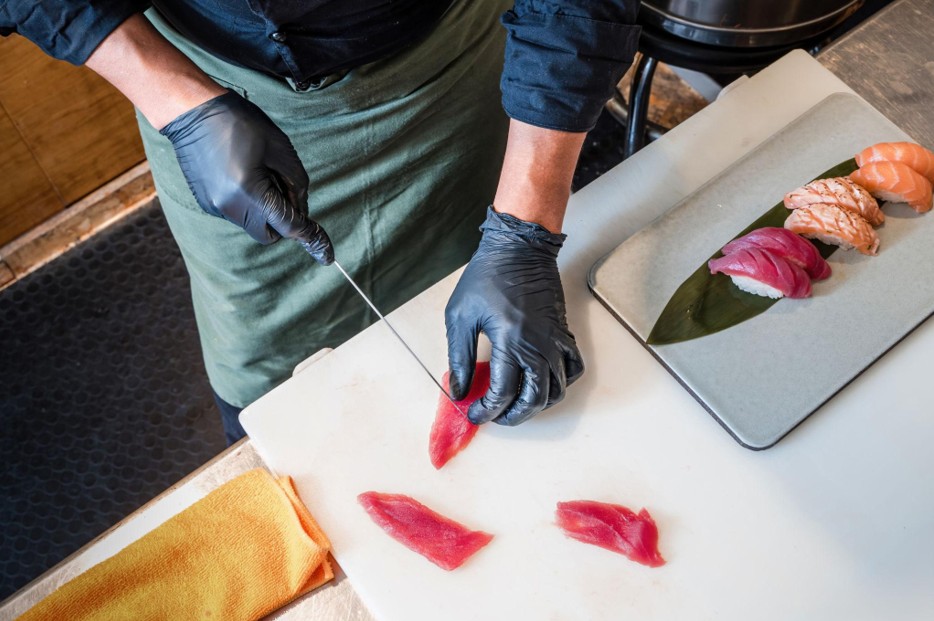
Fish grades and cuts for sushi influence the flavor, texture, appearance, and overall quality of every piece. Consequently, diners who understand each cut can better appreciate the freshness, handling, and craftsmanship behind high-quality sushi.
What Do Fish Grades and Cuts for Sushi Mean?
Seafood professionals evaluate fish for sushi by examining its freshness, appearance, texture, handling, and overall quality. However, no single universal government standard defines the widely used term “sushi-grade.” Instead, reputable suppliers apply the description to fish they carefully source, store, and prepare for raw consumption under appropriate food-safety practices.
High-quality fish should have a clean, fresh aroma, vibrant color, and firm texture. Therefore, diners should choose trusted restaurants and suppliers that follow proper temperature-control and handling procedures.
Common Fish Cuts Used in Sushi
Different cuts produce different textures, richness levels, and flavors. As a result, chefs select each cut according to the type of fish, the location of the flesh, and whether they plan to present it as nigiri, sashimi, or another style of sushi.
Lean Cuts
Lean portions typically have a firmer texture and a cleaner, more delicate taste. For example, diners who prefer a lighter sushi experience often choose lean cuts because they keep the fish’s natural character prominent.
Fatty Cuts
Fatty sections contain more natural oils, creating a rich, buttery texture and deeper flavor. Therefore, sushi chefs often prize these cuts for their smooth mouthfeel and usually serve them simply so their quality remains the focus.
Sashimi Cuts
Chefs serve sashimi without rice, allowing diners to focus entirely on the fish’s flavor, texture, and freshness. As a result, skilled slicing creates a consistent thickness, appealing presentation, and comfortable bite.
Why Fish Grades and Cuts for Sushi Matter
The right fish selection affects more than taste. Moreover, it influences texture, appearance, balance, food safety, and how well each piece suits its intended style. Skilled chefs match each cut to the fish and the chosen presentation, whether they prepare sushi, nigiri, or sashimi.
Therefore, freshness, responsible handling, temperature control, and precise cutting techniques all contribute to a safer and more enjoyable dining experience.
Final Thoughts
Understanding fish grades and cuts for sushi helps explain why some pieces stand out from the rest. For example, quality fish, careful handling, and expert cutting work together to create the flavor, texture, and presentation that sushi lovers appreciate. Ultimately, fish selection remains one of the most important parts of the experience, whether diners choose sushi rolls, nigiri, or sashimi. For more dining news and restaurant insights, explore FEAST Magazine’s restaurant features.
About Sushi Inc.
Sushi Inc. is a vibrant restaurant that many diners consider one of the best places for sushi in St Pete. Since it opened in late 2013, the restaurant has become a local destination for live music, traditional hand-rolled sushi, and a friendly atmosphere. In addition, guests can choose from award-winning, fresh, and creative sushi rolls, nigiri, and sashimi, along with tempura, non-sushi dishes, and teriyaki options. Finally, click here to make your reservation now!