

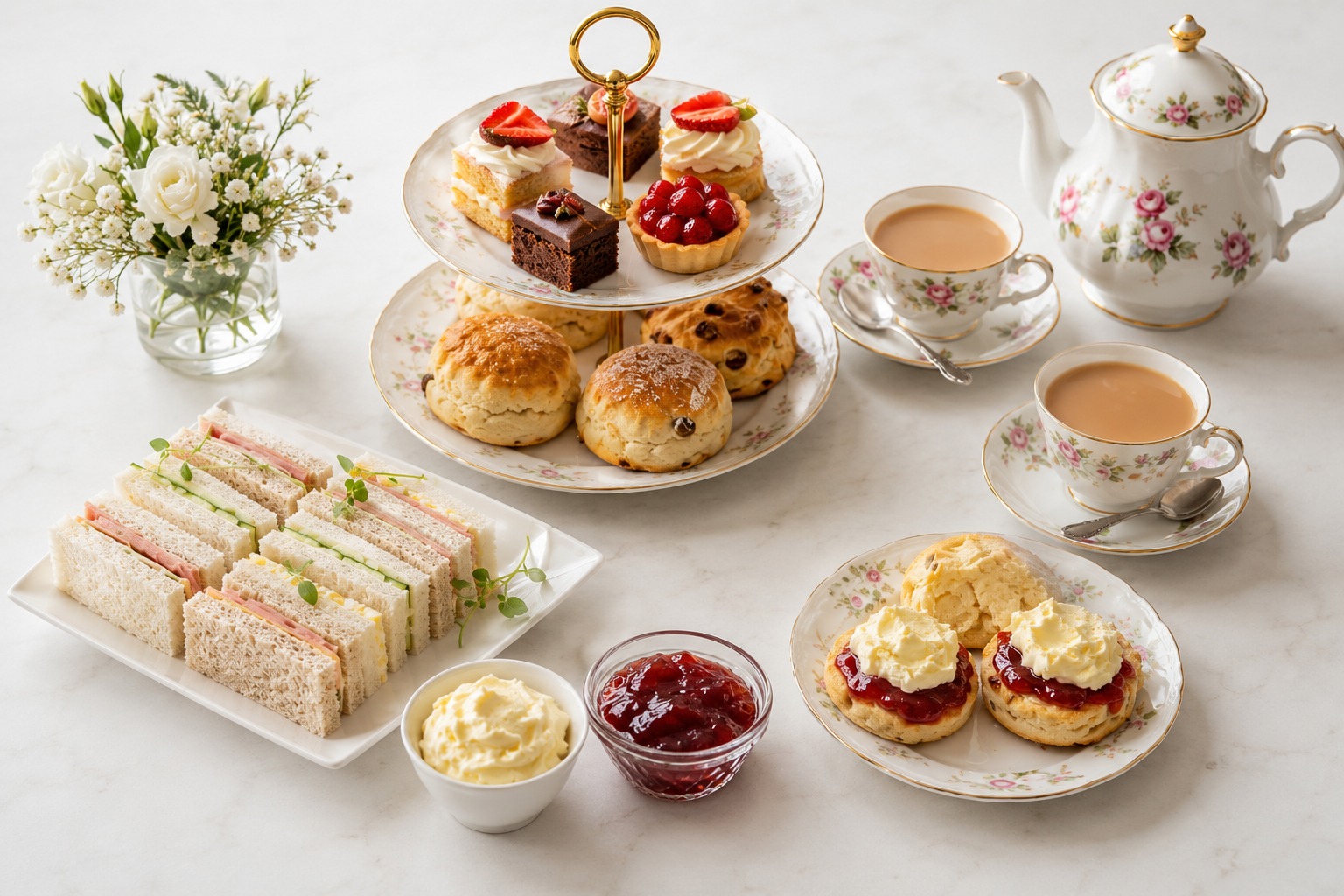
Wondering what to serve at afternoon tea? A well-balanced spread does not need dozens of dishes. The classic formula is simple: a small savoury course, warm scones with cream and jam, a selection of cakes or pastries, and plenty of freshly brewed tea. The detail is in choosing foods that feel generous without becoming heavy, and arranging them so guests can enjoy each course at an easy pace.
For a UK-style afternoon tea at home, think in layers rather than individual recipes. Start with delicate sandwiches, move to scones, then finish with bite-sized sweets. That structure keeps the menu familiar while still leaving room for seasonal flavours, vegetarian options and a few modern additions.
If you are planning your menu during the August celebration, our guide to Afternoon Tea Week 2026: Easy Ideas for Hosting at Home covers the wider hosting side, including table setup and preparation. This guide focuses specifically on the food and drink.
Quick Answer: What Should Be on an Afternoon Tea Menu?
A traditional afternoon tea menu usually includes four elements: finger sandwiches or small savouries, scones with clotted cream and jam, miniature cakes or pastries, and a pot of tea. For most home gatherings, three sandwich fillings, one type of scone, two or three sweet items and two tea choices are more than enough.
- 3 to 4 finger sandwiches per person
- 1 to 2 scones per person
- 2 to 3 small cakes or pastries per person
- Clotted cream and at least one fruit preserve
- A black tea plus one lighter or caffeine-free option
A Complete Traditional Afternoon Tea Menu
If you want a dependable starting point, this is a complete UK afternoon tea menu that works for birthdays, family visits, summer weekends and small celebrations.
Savoury Course: What to Serve at Afternoon Tea
- Cucumber and cream cheese finger sandwiches
- Egg mayonnaise and cress sandwiches
- Smoked salmon with soft cheese and lemon
- Optional extra: mature Cheddar with chutney or ham with mustard
Scone Course
- Fresh plain scones or a mix of plain and fruit scones
- Clotted cream
- Strawberry or raspberry jam
Sweet Course
- Mini Victoria sponge cakes
- Lemon drizzle slices or lemon tartlets
- Chocolate brownie bites, macarons or small fruit pastries
Tea
- English Breakfast or Assam for a full-bodied choice
- Earl Grey for a lighter citrus note
- Peppermint, chamomile or fruit tea as a caffeine-free alternative
This menu gives guests familiar flavours without making every plate taste the same. The sandwiches are fresh and savoury, the scones bring richness, and the final sweets add variety in both texture and flavour.
Start With Finger Sandwiches and Small Savouries
Sandwiches set the tone for the whole meal, so keep them neat, fresh and easy to eat in two or three bites. Soft bread works best. White bread suits cucumber, egg and smoked salmon particularly well, while a light wholemeal loaf can add contrast to cheese or ham fillings.
For a four-person table, choose three fillings rather than making every combination you can think of. Too many varieties create more preparation and usually leave you with leftovers.
Classic Afternoon Tea Sandwich Fillings
- Cucumber with cream cheese, black pepper and a little dill
- Egg mayonnaise with cress
- Smoked salmon with soft cheese and lemon zest
- Coronation chicken
- Ham with English mustard
- Mature Cheddar with chutney
If you want a more British-inspired filling mix, FEAST has also covered Britain’s most popular sandwich fillings, which can be useful inspiration when adapting the traditional selection for a crowd.
How to Keep Sandwiches Fresh
Prepare the fillings ahead, but assemble the sandwiches as close to serving time as practical. Moisture is the main problem: watery cucumber, warm fillings and uncovered bread can turn a neat sandwich into something soggy or dry. Pat cucumber slices dry, cool cooked fillings fully and keep finished sandwiches covered until the table is ready.
Cutting off the crusts is traditional but optional. What matters more is consistent size. Fingers, small rectangles and triangles all work; just avoid oversized portions that feel more like lunch than afternoon tea.
Make Scones the Middle Course
Scones are the bridge between the savoury and sweet sides of the menu. They should feel warm, soft and substantial without being so large that nobody has room for cake afterwards.
For most guests, one medium scone is enough when there are several other items on the table. If the scones are small, offer two. Plain scones are the easiest crowd-pleaser, while fruit scones can be added as a second option if you are serving a larger group.
For a more contemporary take on the course, FEAST has featured the Afternoon Tea Week creations at KNEAD Bakery, where seasonal and flavoured scones show how the classic can be updated without losing the spirit of afternoon tea.
What to Serve at Afternoon Tea With Scones
- Clotted cream
- Strawberry jam
- Raspberry jam or lemon curd as an optional second spread
There is no need to overcomplicate this course. A good scone, a generous spoonful of cream and a bright fruit preserve already deliver the contrast people expect.
Finish With Small Cakes and Pastries
The sweet course is where an afternoon tea menu can show the most personality. The trick is to keep portions small. A full slice of cake may look impressive on its own, but after sandwiches and scones it can feel too heavy.
Choose two or three sweets with different characteristics: one light or fruity option, one soft sponge or pastry, and one richer chocolate or caramel item.
Sweet Ideas: What to Serve at Afternoon Tea
- Mini Victoria sponge cakes with jam and cream
- Lemon drizzle fingers
- Fruit tartlets
- Chocolate brownie squares
- Madeleines
- Macarons
- Mini cheesecakes
- Shortbread biscuits
For more inspiration on balancing classic and creative cakes, see FEAST’s National Cake Day guide, which includes a broad mix of familiar bakes that can be scaled down for an afternoon tea stand.
Which Tea Should You Serve?
The tea should support the food rather than compete with it. You do not need an enormous tea menu at home; two or three choices feel generous and are much easier to manage.
English Breakfast
A dependable all-rounder with enough body for sandwiches, scones and rich cakes. If you only want to serve one black tea, this is the safest choice.
Earl Grey
The citrus character works particularly well with lemon cakes, lighter pastries and cucumber sandwiches. It also gives guests a noticeably different option from a standard breakfast blend.
Herbal or Fruit Tea
A caffeine-free choice is useful for children, evening gatherings and guests who simply prefer something lighter. Peppermint is refreshing after richer foods, while berry blends work well with fruit-based desserts.
FEAST has also explored modern tea culture in its coverage of Whittard of Chelsea’s Bridgerton-inspired afternoon tea, a useful example of how tea traditions can be presented in a more contemporary setting.
What Order Should Afternoon Tea Be Served In?
A simple serving order keeps the meal comfortable and helps each part of the menu feel distinct:
- Begin with sandwiches and savoury bites.
- Move on to warm scones with clotted cream and jam.
- Finish with cakes, pastries and other sweet treats.
- Keep tea available throughout rather than treating it as a separate final course.
On a three-tier stand, the same logic can be reflected visually: savouries at the bottom, scones in the middle and cakes at the top. It makes the menu easy to understand at a glance, especially when guests are serving themselves.
Sample Afternoon Tea Menu for Four People
If you want exact quantities without overbuying, this menu is a practical starting point for four adults.
| Course | What to Serve | Suggested Quantity |
| Sandwiches | 3 fillings | 12–16 finger sandwiches |
| Scones | Plain or mixed plain/fruit | 6 small or 4 medium scones |
| Cream & jam | Clotted cream + fruit preserve | 1 small pot of each |
| Cakes | 2–3 varieties | 8–12 small pieces |
| Tea | 2 choices | Enough for 2–3 cups each |
How to Make the Menu Feel Modern Without Losing the Classics
A traditional afternoon tea menu does not have to be frozen in time. The easiest way to modernise it is to keep the structure but change one or two flavours. You might serve classic cucumber and egg sandwiches alongside a more adventurous savoury, or keep plain scones while choosing a pistachio, raspberry or matcha dessert.
FEAST’s feature on London by Lily Vanilli at Four Seasons Hotel London at Tower Bridge is a good example of this approach: the format remains recognisably afternoon tea, but the flavours and presentation move beyond the most familiar combinations.
Dietary Options: What to Serve at Afternoon Tea
If you are catering for different diets, avoid making one guest’s plate feel like an afterthought. Build at least one complete mini-menu for them, including a savoury, a scone or equivalent bake, and a sweet item.
- Vegetarian: cucumber and cream cheese, egg and cress, Cheddar and chutney
- Vegan: hummus and cucumber, roasted pepper, dairy-free scones and plant-based cakes
- Gluten-free: use dedicated gluten-free bread and bakes, prepared separately where cross-contamination matters
For allergies, always check labels and preparation requirements carefully rather than assuming that an item is safe because the main ingredients appear suitable.
What Can Be Shop-Bought?
Not everything needs to be homemade. In fact, a mixed approach often produces a better afternoon tea because you can spend your time on the items where freshness matters most.
- Make the sandwiches yourself so they stay fresh.
- Buy good bakery scones if you do not enjoy baking, then warm them just before serving.
- Bake one signature cake and buy one or two small pastries.
- Use good-quality jam and clotted cream rather than making every accompaniment from scratch.
Presentation makes the biggest difference. Remove packaging, cut cakes into neat portions and arrange everything on plates or stands before guests arrive.
Afternoon Tea Week 2026
If you are planning this menu as part of the annual celebration, the official Afternoon Tea Week 2026 page lists the event and participating afternoon tea offers. In 2026, Afternoon Tea Week runs from 10 to 16 August.
Common Afternoon Tea Menu Mistakes to Avoid
- Making too many sandwich fillings and ending up with a cluttered menu
- Serving large cake slices that are difficult to finish after scones
- Assembling sandwiches too early and letting the bread dry out
- Offering only one drink when some guests do not drink black tea
- Forgetting a savoury option for vegetarian or vegan guests
- Putting everything on the table at once without enough serving space
The best afternoon tea menus feel abundant but not excessive. Guests should be able to try a little of everything without feeling they have been served a full three-course dinner.
Frequently Asked Questions
What to Serve at Afternoon Tea: Classic Items
The core items are finger sandwiches, scones with clotted cream and jam, small cakes or pastries, and tea. A home menu can be kept very simple as long as it includes both savoury and sweet elements.
How many sandwiches should I serve per person?
Three to four finger sandwiches per adult is a useful starting point when you are also serving scones and cakes. Increase the amount if afternoon tea is replacing lunch.
Do you serve scones before or after sandwiches?
Serve sandwiches and savouries first, then scones, then cakes and pastries. Tea can be poured throughout the meal.
What is the best tea for afternoon tea?
English Breakfast is the easiest all-round choice. Earl Grey adds a lighter citrus option, while a herbal or fruit tea gives guests a caffeine-free alternative.
Can I prepare afternoon tea the day before?
You can prepare cake, fillings, tableware and many decorations the day before. Assemble sandwiches closer to serving time, and warm or serve scones fresh where possible.
What to Serve at Afternoon Tea for a Simple Menu?
For a simple menu, choose three sandwich fillings, one type of scone with cream and jam, two small cakes, and two tea choices. That is enough variety for most small gatherings.
Build the Menu Around Balance, Not Quantity
When deciding what to serve at afternoon tea, the most useful rule is to think about balance. A few fresh sandwiches, warm scones, two or three small sweets and a good pot of tea create a complete experience without making the table complicated.
Keep the savouries light, make the scones feel special and finish with desserts that are small enough to sample. Once those basics are in place, you can adapt the flavours for the season, the occasion and the people around your table. That is what turns a traditional afternoon tea menu into one guests will actually want to linger over.