

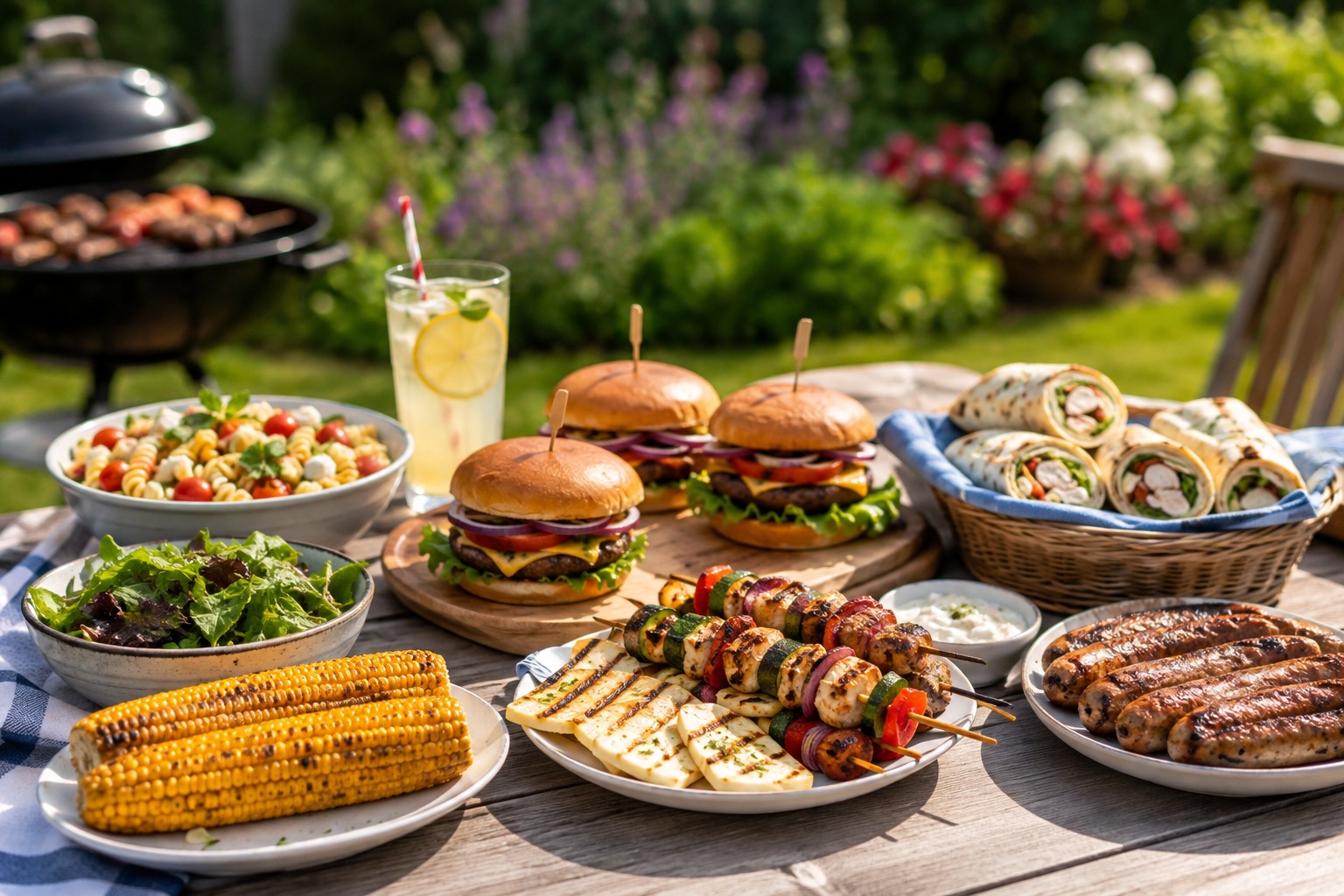
The best August Bank Holiday food ideas make it easy to stretch a summer lunch into a long afternoon. In England, Wales and Northern Ireland, the 2026 summer bank holiday falls on Monday 31 August, according to the official UK bank holiday calendar. That makes it a natural weekend for a garden barbecue, a picnic in the park or a table full of food that people can help themselves to without anyone spending the whole day in the kitchen.
The best Bank Holiday food is not complicated food. It is food that can be prepared in stages, shared easily and rescued if the weather changes its mind. A few hot items from the grill, two or three generous sides, something portable for picnic plans and a dessert that does not need delicate last-minute work is more than enough for a memorable spread.
| Quick Answer: What should you serve for an August Bank Holiday? Build the menu around two easy BBQ mains, one vegetarian option, two make-ahead sides, one or two picnic-friendly foods, a simple dessert and plenty of cold drinks. Burgers, chicken skewers, halloumi, corn, pasta salad, sausage rolls, wraps, berries and traybakes all work well because they are familiar, flexible and easy to scale for a group. |
August Bank Holiday Food Ideas: Start With a Flexible Menu
A Bank Holiday lunch rarely happens at one exact time. Someone arrives early, someone else is stuck in traffic, children want to eat immediately and the person holding the tongs inevitably gets pulled into a conversation. Choose food that tolerates that rhythm. Skewers can be marinated ahead, salads can sit in the fridge, and rolls or wraps can be brought out while the barbecue heats up.
Before shopping, decide how many true mains you need and check the small things that are easiest to forget. FEAST’s BBQ shopping list UK is useful for building the supermarket run around mains, sides, drinks, sauces, ice and fuel rather than discovering halfway through the day that the charcoal or ketchup never made it into the trolley.
Easy BBQ Choices for August Bank Holiday Food Ideas
- Lemon and herb chicken skewers. Cut chicken thighs into even pieces and marinate them with lemon zest, garlic, olive oil, oregano and black pepper. Thigh meat stays juicier than breast on a busy grill, which gives you a little more room for error. Thread with red onion or courgette and finish with fresh lemon after cooking.
- Cheeseburgers with a proper toppings tray. Keep the burgers straightforward and make the choice happen at the table. Put out sliced cheese, lettuce, pickles, tomato, fried onions, mustard, ketchup and a smoky sauce. Guests can build their own, and you avoid trying to remember six different orders beside a hot barbecue.
- Sticky sausage and pepper skewers. Slice cooked or nearly cooked sausages into large pieces, thread them with sweet peppers and brush with a mixture of honey, mustard and a little cider vinegar. They are easier to share than full sausages and work particularly well when there are several other mains on the table.
- Halloumi, courgette and red onion skewers. A vegetarian option should feel like part of the menu, not an afterthought. Thick halloumi cubes, ribbons or chunks of courgette and red onion take on colour quickly. Add a squeeze of lemon and a spoonful of herby yoghurt just before serving.
- Charred corn with chilli-lime butter. Corn is inexpensive, easy to hold and good with almost everything on a barbecue plate. Mix softened butter with lime zest, a pinch of chilli flakes and salt, then brush it over the cobs while they are still hot.
If you want more ideas for organising the grill itself, FEAST’s guide to easy BBQ food ideas for UK summers is a useful companion read. The main lesson for a Bank Holiday is to avoid putting every item on the barbecue at once. Cook in waves, keep one section of the grill cooler, and let the food come to the table gradually.
Picnic-Friendly August Bank Holiday Food Ideas
If the plan is a park, beach or countryside stop, choose food that tastes good at room temperature and does not need assembling on a blanket. Anything excessively saucy, fragile or difficult to cut becomes work once you leave the kitchen.
Sausage rolls with mustard and herbs. Homemade or good-quality shop-bought sausage rolls are reliable picnic food for a reason. Cut larger rolls into two-bite pieces so people can take one without committing to a full meal. A little wholegrain mustard or caramelised onion in the filling makes them feel more considered.
Chicken pesto wraps. Spread tortillas lightly with pesto, add sliced cooked chicken, rocket and roasted peppers, then roll tightly and chill before cutting. Keep the filling modest; overfilled wraps are the ones that fall apart first.
Tomato, mozzarella and basil pasta salad. Use short pasta, ripe tomatoes, small mozzarella pieces and plenty of basil. Dress with olive oil and a small splash of balsamic rather than a heavy creamy dressing. It is colourful, filling and easy to portion into lidded containers.
Mini ploughman’s boxes. Pack cubes of Cheddar, apple wedges, crackers, pickled onions and a little chutney in individual containers. It gives the familiar ploughman’s combination a picnic-friendly format and works well for guests who prefer to graze rather than eat one large plate.
Crunchy slaw flatbreads. Keep the slaw and flatbreads separate until serving if you can. A cabbage, carrot and spring onion slaw with a sharp yoghurt dressing stays fresher than one drenched in mayonnaise and pairs well with leftover grilled chicken or halloumi.
For the non-food details that make outdoor eating easier, use a simple picnic packing checklist before leaving home. Napkins, a rubbish bag, a bottle opener and enough cold packs are not exciting, but they are often the difference between an easy picnic and a frustrating one.
Make-Ahead Sides for August Bank Holiday Food Ideas
The safest way to overcomplicate a barbecue is to make seven side dishes. Two or three good ones are usually enough: one filling, one fresh and one crunchy.
Herby new potato salad. Boil small potatoes until tender, let them steam dry and dress them while still slightly warm with olive oil, Dijon mustard, chopped parsley, chives and a squeeze of lemon. It is lighter than a mayonnaise-heavy version and holds up well beside grilled food.
Tomato, cucumber and red onion salad. Use the ripest tomatoes you can find, add cucumber and very thin red onion, then season just before serving. A small amount of vinegar or lemon keeps it bright without turning the bottom of the bowl into soup.
Apple and cabbage slaw. Finely shredded cabbage, crisp apple and carrot give you crunch without requiring much effort. Dress it close to serving time so it stays lively.
If you are feeding a mixed group and want a few less obvious additions, FEAST’s summer courgette recipe ideas can help fill the gaps without turning the menu into a second catering job.
Easy Desserts for August Bank Holiday Food Ideas
Lemon drizzle traybake. Bake it the day before, slice it in the tin and bring the whole tray out when people are ready. It travels well, keeps its texture and feels summery without needing refrigeration for every minute of the afternoon.
Berry Eton mess pots. For a garden gathering, layer crushed meringue, berries and softly whipped cream in small glasses just before serving. For a picnic, take the three components separately and assemble on site so the meringue stays crisp.
Chocolate fridge bars. A no-bake chocolate biscuit bar is useful when the oven is already busy with other prep. Cut it into small squares because rich desserts disappear more easily when people can take a little piece at a time.
Cold watermelon with lime. Not every dessert needs to be baked. Chilled watermelon wedges with lime are particularly welcome after salty barbecue food and require almost no work beyond cutting and keeping them cold.
Keep the Drinks Simple and Properly Cold
Water should be easy to reach from the moment people arrive. Add sparkling water, lemonade, iced tea and a couple of more grown-up alcohol-free choices, then keep everything in a large tub or cool box with ice rather than repeatedly opening the fridge.
For anyone building a wider zero- or low-alcohol drinks selection, FEAST’s Drinks section gives more options than simply buying extra cans of fizzy drink. A thoughtful alcohol-free choice also means designated drivers and non-drinkers are not left with the least interesting part of the table.
What if the Bank Holiday Weather Turns Rainy?
Do not design a completely different menu for bad weather. Design one menu that can move indoors. Chicken skewers, sausages, halloumi and corn can all be cooked under a grill or in the oven if the barbecue becomes impractical. Pasta salad, slaw, sausage rolls and traybakes do not care whether they are eaten in a garden or around the kitchen table.
The useful backup plan is about equipment, not recipes. Clear a baking tray, check that the grill pan is clean, keep serving platters ready and avoid marinating everything in a sauce that will burn aggressively under an indoor grill. If the sky clears later, you can still move outside for dessert and drinks.
How Much Food Do You Need?
There is no perfect formula because appetites and menus vary, but a simple structure prevents the most common mistake: buying too many mains and forgetting the sides.
- For 6 people: choose 2 mains, 2 sides, 1 picnic-style snack and 1 dessert.
- For 10 people: choose 2–3 mains, including a vegetarian option, 3 sides, 2 easy snacks and 1–2 desserts.
- For 20 people: keep the number of recipes under control and scale the same dishes up. Two meat mains, one vegetarian main, three large sides, bread, snacks and two desserts are easier to manage than ten small recipes.
For a mixed-age group, allow more bread, fruit and simple snacks than you think you need. They are inexpensive, require little preparation and give children or picky eaters something familiar while the hot food is still cooking.
A Simple Make-Ahead Plan
The Night Before
- Marinate chicken and prepare any sauces or flavoured butter.
- Bake the traybake or make fridge bars.
- Cook the potatoes and prepare salad ingredients, keeping dressings separate where appropriate.
- Chill drinks and freeze ice packs.
On the Morning
- Assemble skewers and wraps.
- Pack picnic containers or set out serving dishes for a garden meal.
- Cut the fruit, wash the salad leaves, and prepare the toppings.
- Check barbecue fuel, foil, utensils and rubbish bags.
Just Before People Eat
- Dress fresh salads.
- Cook the hot food in batches rather than all at once.
- Bring cold drinks out in ice.
- Keep dessert back until the savoury food has had its moment.
Frequently Asked Questions About August Bank Holiday Food Ideas
What Food Is Good for an August Bank Holiday?
Foods that are easy to share and do not demand precise timing work best. Think burgers, chicken or halloumi skewers, corn, potato salad, slaw, wraps, sausage rolls, fruit and traybakes. The aim is a spread that can be eaten gradually rather than a formal meal that has to reach the table all at once.
What Should I Take to a UK Picnic?
Choose sturdy, portable food such as wraps, rolls, pasta salad, cheese, fruit and baked treats. Add plenty of water, napkins, cutlery where needed, a rubbish bag and enough cold packs to keep chilled foods properly cold.
What Can I Prepare the Night Before a Bank Holiday BBQ?
Marinades, skewers, dressings, potato salad components, slaw vegetables, sauces and most traybakes can be prepared ahead. Leave very fresh salads, sliced bread and final dressing until closer to serving so they do not lose texture.
What Are Easy BBQ Foods for a Crowd?
Burgers, sausages, chicken thighs or skewers, halloumi, corn and large trays of potatoes are easy to scale. The trick is to keep the number of different dishes modest and increase quantities rather than adding more recipes.
How Can I Make a Bank Holiday Menu Vegetarian-Friendly?
Offer at least one substantial vegetarian main, such as halloumi and vegetable skewers, grilled mushroom burgers or stuffed flatbreads, and make sure several sides are vegetarian too. Use separate utensils and a clean section of the grill if guests prefer their food kept apart from meat.
A Good Bank Holiday Spread Should Feel Easy
The point of an August Bank Holiday meal is not to prove how many dishes you can cook. Choose a small group of foods that work together, prepare the fiddly parts early and leave enough flexibility for people to eat when they are hungry. A few well-cooked barbecue favourites, fresh picnic foods, cold drinks and an unfussy dessert will do more for the day than an overambitious menu that keeps the host in the kitchen.
And if the weather stays sunny, all the better. If it does not, the same food can still turn a wet Monday into a very good lunch.