

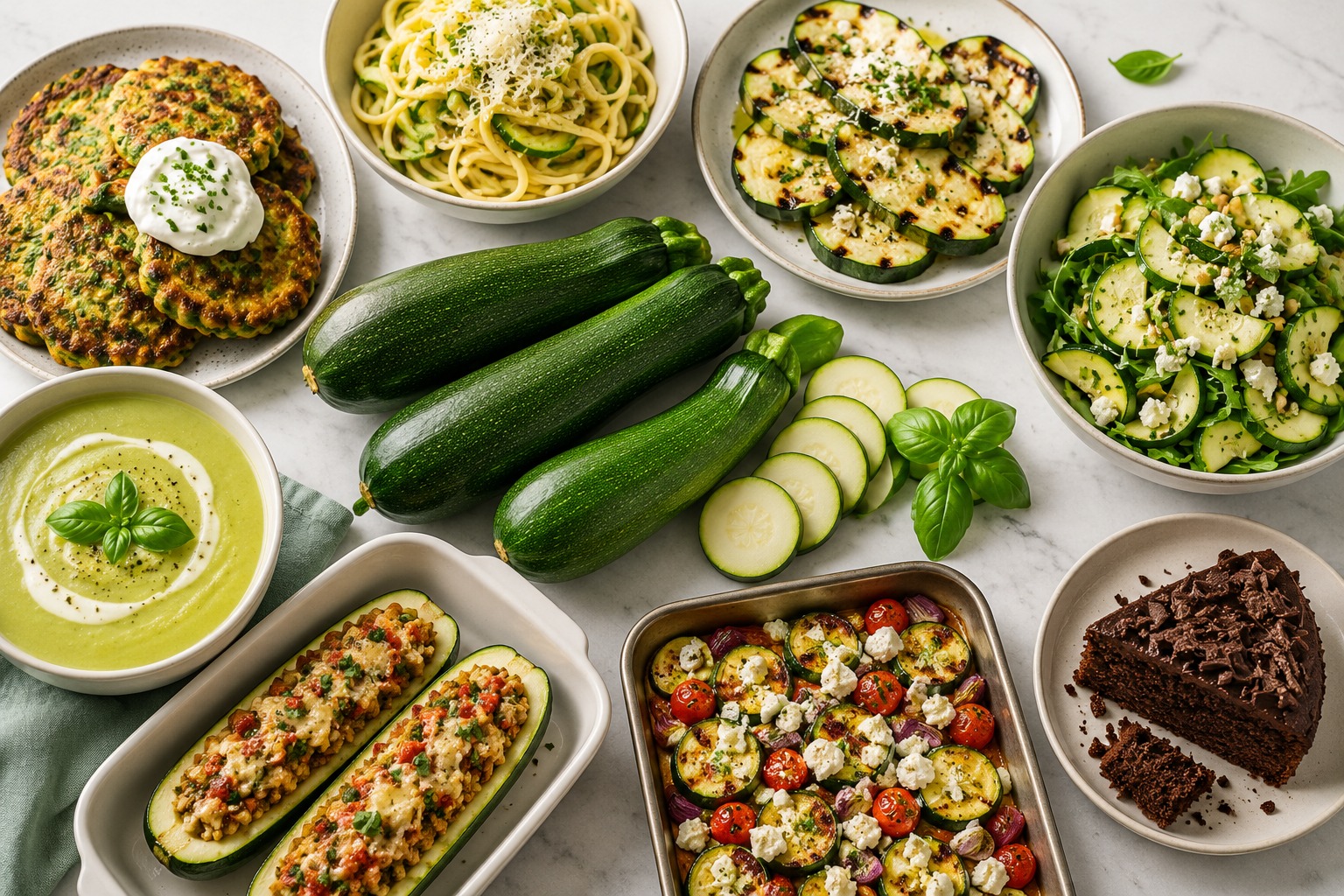
Wondering what to do with courgettes? The answer is more varied than another bowl of boiled vegetables. For example, courgettes can be fried into crisp fritters, folded through pasta, grilled for salads, blended into soup, stuffed for dinner, roasted on a tray, cooked in an air fryer or even baked into chocolate cake.
In addition, they are among the easiest summer vegetables to adapt around what is already in the fridge. For example, a small courgette can become a quick side dish, while a larger one can carry a filling of grains, beans, cheese or mince. For more seasonal ingredient ideas, browse FEAST Online’s fresh produce guides and practical food features.
Therefore, this guide gives eight realistic ideas for UK kitchens, with simple ingredients, flexible serving suggestions and tips for preventing courgettes from turning watery.
| Quick Answer: What Can You Make With Courgettes? Courgettes work well in fritters, pasta, grilled salads, stuffed boats, soup, vegetable traybakes, air-fryer chips and moist cakes. For the best texture, cook them over fairly high heat, avoid crowding the pan and season near the end when possible. Larger courgettes are best grated, stuffed or blended because their centres can be softer and more watery. |
What to Do With Courgettes: Quick Facts
| Question | Useful Answer | Best Method | Good Pairings |
| Can you eat the skin? | Yes, the skin is tender and edible. | Wash, trim, and cook without peeling. | Lemon, garlic, basil, mint, and feta |
| Why do they go watery? | They contain plenty of moisture. | Use high heat and avoid overcrowding. | Tomatoes, peppers, onions, and herbs |
| Can they be frozen? | Yes, although the texture softens. | Freeze grated or blanched pieces. | Soups, sauces, stews, and baking |
| What about very large ones? | Use it like a small marrow. | Scoop, stuff, grate or blend. | Rice, beans, mince, and cheese |
Why Courgettes Are So Useful in Summer
Courgettes have a mild flavour, which is exactly why they are so useful. Because of this mildness, they take on garlic, chilli, herbs, lemon, tomato, cheese and spices without competing with them. As a result, they can sit beside grilled meat, form the base of a vegetarian dinner, or disappear into sauces for people who are not enthusiastic about obvious chunks of vegetables.
Furthermore, they fit naturally into lighter warm-weather cooking. Pair grilled slices with one of these fresh cucumber recipes, or serve fritters and salads alongside FEAST Online’s summer BBQ food ideas. Readers looking for more meat-free inspiration can also explore the vegetarian and vegan section.
1. What to Do With Courgettes: Crisp Fritters
Courgette fritters are the quickest answer when you have two vegetables to use and need lunch in half an hour. Most importantly, squeeze out the grated courgette before mixing. Otherwise, the batter becomes loose rather than crisp.
Ingredients
- 2 medium courgettes, coarsely grated
- 1 teaspoon salt
- 2 spring onions, finely sliced
- 1 egg
- 60g plain flour
- 50g crumbled feta or grated cheddar
- Black pepper and a pinch of chilli flakes
- A little oil for frying
Method
- Toss the grated courgette with salt and leave it in a colander for 10 minutes.
- Squeeze it firmly in a clean tea towel until very little liquid comes out.
- Mix with the spring onions, egg, flour, cheese and seasoning.
- Heat a thin layer of oil in a frying pan. Add spoonfuls of mixture and flatten them slightly.
- Cook for 3 to 4 minutes on each side until golden and set in the middle.
Serve with Greek yoghurt, lemon and herbs. They also work as a barbecue side, a lunchbox filling or a base for poached eggs.
2. What to Do With Courgettes: Lemon and Garlic Pasta
This is a useful weeknight dinner because the courgette becomes the sauce rather than sitting on the side. Thin slices cook quickly, while a splash of pasta water helps the vegetables cling to spaghetti, linguine or penne. In addition, it fits naturally with other easy pasta recipes for busy evenings.
Ingredients
- 250g pasta
- 2 courgettes, sliced into thin half-moons
- 2 garlic cloves, finely chopped
- 1 tablespoon olive oil
- Zest and juice of half a lemon
- A handful of grated Parmesan or vegetarian hard cheese
- Fresh basil or parsley
- Salt and black pepper
Method
- Cook the pasta until al dente, saving a mug of the cooking water.
- Heat the oil in a wide pan and cook the courgette over medium-high heat until lightly browned.
- Add the garlic for the final minute, then stir in lemon zest and a small squeeze of juice.
- Add the pasta with a splash of cooking water and toss until glossy.
- Finish with cheese, herbs, and black pepper.
Alternatively, add peas, spinach, cooked chicken, prawns, or white beans when you want more protein.
3. What to Do With Courgettes: Grilled Feta Salad
Raw courgette can be pleasant when shaved thinly. However, grilling gives it a sweeter flavour and a firmer bite. This salad is particularly good for picnics and garden meals because it tastes fine at room temperature.
Ingredients
- 3 courgettes, sliced lengthways
- 1 tablespoon olive oil
- 100g feta
- A handful of rocket or mixed leaves
- Fresh mint
- Juice of half a lemon
- Toasted pumpkin seeds or pine nuts
- Salt and black pepper
Method
- Brush the courgette slices lightly with oil.
- Cook on a hot griddle pan or barbecue for 2 to 3 minutes per side.
- Arrange on a plate with leaves, crumbled feta, mint, and seeds.
- Finish with lemon juice, black pepper, and a very small pinch of salt.
For example, add flatbreads, hummus, and a cool drink from FEAST Online’s drinks section for a fuller spread.
4. What to Do With Courgettes: An Easy Stuffed Dinner
Stuffed courgettes are ideal for larger vegetables that have developed a softer centre. Once the seeds are scooped out, the shell becomes a neat container for leftovers.
Simple filling formula
- 2 large courgettes, halved lengthways
- 1 cooked grain: rice, couscous, or quinoa
- 1 protein: lentils, beans, cooked mince, or shredded chicken
- 1 flavour base: tomato sauce, pesto or harissa
- 1 topping: grated cheese, breadcrumbs, or seeds
Method
- Heat the oven to 200°C, or 180°C fan.
- Scoop out the soft centre, leaving a firm border around the skin.
- Chop the scooped flesh and cook it with the chosen filling ingredients.
- Fill the courgette shells, add the topping, and place them in a baking dish.
- Bake for 25 to 35 minutes until the shells are tender and the top is golden.
For instance, a lentil and tomato filling keeps the dish vegetarian, while turkey mince or chicken makes it more substantial. For more balanced evening inspiration, see these low-calorie dinner ideas.
5. What to Do With Courgettes: Pea and Mint Soup
Soup is one of the best ways to use courgettes that have become slightly soft. The flavour stays fresh rather than heavy. Meanwhile, peas add colour and sweetness. It can be served warm on a cooler day or chilled in summer.
Ingredients
- 1 tablespoon olive oil
- 1 onion, chopped
- 3 courgettes, chopped
- 500ml vegetable stock
- 150g frozen peas
- A small handful of mint
- 2 tablespoons creme fraiche or Greek yoghurt, optional
- Black pepper
Method
- Soften the onion in olive oil for 5 minutes.
- Add the courgettes and cook for another 5 minutes.
- Pour in the stock and simmer for 12 to 15 minutes.
- Add the peas for the final 3 minutes.
- Blend with mint until smooth, then add creme fraiche or yoghurt if using.
Finally, serve with toast, a cheese sandwich or a spoonful of pesto.
6. What to Do With Courgettes: Mediterranean Traybake
A traybake is useful when you want dinner without standing over the hob. Therefore, cut the courgettes into thick pieces so they roast rather than collapse.
Ingredients
- 2 courgettes, cut into thick half-moons
- 1 red pepper, chopped
- 1 red onion, cut into wedges
- 250g cherry tomatoes
- 1 tin chickpeas, drained
- 1 tablespoon olive oil
- 1 teaspoon dried oregano
- Feta, halloumi, or chicken pieces, optional
Method
- Heat the oven to 220°C, or 200°C fan.
- Spread the vegetables and chickpeas over a large tray in a single layer.
- Add oil, oregano, black pepper, and a small pinch of salt, then toss well.
- Roast for 25 to 30 minutes, turning once.
- Add feta for the final 10 minutes, or cook halloumi separately so it stays crisp.
Afterwards, serve with couscous, crusty bread, rice or a spoonful of yoghurt. Leftovers are good in wraps the next day.
7. What to Do With Courgettes: Air-Fryer Chips
Courgette chips will never be exactly like potato chips. However, a breadcrumb coating gives them a crisp outside and a tender centre. They make a good snack, side dish, or lighter alternative to fried vegetables. For more timings and everyday ideas, browse FEAST Online’s air fryer recipes and kitchen technology coverage.
Ingredients
- 2 courgettes, cut into thick batons
- 1 egg, beaten
- 60g breadcrumbs
- 25g grated Parmesan
- Half a teaspoon garlic powder
- Black pepper
- Oil spray
Method
- Pat the courgette batons dry with kitchen paper.
- Dip them in beaten egg, then coat with breadcrumbs, Parmesan, and seasoning.
- Arrange in a single layer in the air fryer basket and spray lightly with oil.
- Cook at 190°C for 10 to 14 minutes, turning halfway, until golden.
Cook in batches rather than stacking them. Finally, serve with tomato dip, garlic yoghurt or chilli sauce.
8. What to Do With Courgettes: Chocolate Cake
Courgette adds moisture to chocolate cake without making it taste like a vegetable. Therefore, it is a practical way to use a surplus, particularly when some courgettes have become too large for quick frying.
Ingredients
- 250g courgette, finely grated and lightly squeezed
- 200g self-raising flour
- 40g cocoa powder
- 150g soft brown sugar
- 2 eggs
- 120ml vegetable oil
- 1 teaspoon vanilla extract
- 75g dark chocolate chips, optional
Method
- Heat the oven to 180°C, or 160°C fan, and line a 20cm cake tin.
- Mix the flour and cocoa in one bowl.
- Whisk the sugar, eggs, oil, and vanilla in another bowl.
- Fold the wet ingredients into the dry mixture, then stir through the grated courgette and chocolate chips.
- Bake for 35 to 45 minutes, until a skewer comes out with only a few moist crumbs.
Afterward, let the cake cool before slicing. A thin layer of chocolate icing is enough because the sponge is already moist.
How to Stop Courgettes Going Soggy
Courgettes release water as they cook. Therefore, texture depends more on technique than complicated ingredients. These small adjustments make the biggest difference:
- Use a wide pan. A crowded pan traps steam and softens the vegetables.
- Cook over medium-high or high heat for frying and grilling.
- Cut pieces to a similar size so they finish at the same time.
- Pat the surface dry before air frying, roasting, or breading.
- Salt grated courgette and squeeze it before making fritters, muffins, or cakes.
- Do not overcook. Courgette should be tender but still hold its shape in most savoury dishes.
Choosing the Best Courgettes
Small and medium courgettes usually have the best texture. Look for smooth, firm skin and avoid vegetables with deep cuts or soft patches. However, very large home-grown courgettes are still useful, although their seeds and centre may need to be removed before cooking.
British-grown courgettes are more common than many shoppers realise. FEAST Online has also covered a survey on vegetables grown in the UK, which found that courgettes were among the everyday foods some people wrongly assumed had to be imported.
What to Do With Courgettes: Storage and Freezing
Keep fresh courgettes in the fridge and wash them just before use. In addition, avoid sealing damp vegetables in a container because trapped moisture speeds up softening. Love Food Hate Waste’s courgette guide advises that courgettes can be frozen in a sealed bag or airtight container for up to three months.
For example, choose a freezing method that suits the future recipe:
- Grate and freeze in measured portions for cakes, fritters and sauces.
- Blanch sliced pieces briefly before freezing for soups and stews.
- Freeze cooked soup or tomato-courgette sauce in containers for quick meals.
- Expect thawed courgette to be softer, so use it in cooked dishes rather than salads.
What to Do With Courgettes When They Are Oversized
Garden courgettes can become marrow-sized almost overnight. However, they are not wasted; they simply need a slightly different approach. Slice one open and check the centre. If the seeds are large and the flesh feels spongy, scoop the middle out.
The best uses for oversized courgettes are stuffed bakes, soup, chutney, grated sauces and cakes. Thick rounds can also be brushed with oil and roasted, although they may need longer than smaller vegetables.
Final Thoughts: What to Do With Courgettes
The easiest way to decide what to do with courgettes is to match the recipe to their size and texture. Small firm courgettes are best for grilling, frying and salads. Medium ones work in pasta, traybakes and air-fryer recipes. Larger or softer vegetables are ideal for stuffing, soup, sauces and baking.
Therefore, start with one method that fits the meal you already planned rather than buying a long list of extra ingredients. A lemony pasta, crisp fritters or a simple traybake can use several courgettes without making dinner feel like a project. For more everyday inspiration, explore the latest FEAST Online food stories.
What to Do With Courgettes: Frequently Asked Questions
Can you eat courgettes raw?
Yes. Small, fresh courgettes can be shaved into ribbons or sliced very thinly for salads. Lemon juice, olive oil, herbs and Parmesan work well. Larger courgettes are usually better cooked because their texture is softer and their seeds may be more noticeable.
Do you need to peel courgettes?
No. Courgette skin is edible and usually tender. Wash the vegetable, trim both ends and cook it with the skin on. Peel only when the skin is damaged or unusually tough.
Why should grated courgette be squeezed?
Grated courgette holds a lot of water. Squeezing it helps fritters brown, prevents cakes from becoming heavy and keeps savoury bakes from turning watery.
Can you freeze courgettes without blanching?
Grated courgettes can be frozen without blanching when they are intended for sauces, fritters or baking. Sliced courgettes usually keep better after brief blanching, although their texture will still soften after thawing.
What flavours go well with courgettes?
Courgettes pair well with garlic, lemon, chilli, basil, mint, parsley, tomato, feta, Parmesan, pesto, yoghurt, chickpeas, chicken and fish.
What is the quickest way to cook courgettes?
Slice them thinly and fry in a hot wide pan with a little oil for 5 to 7 minutes. Turn occasionally and add garlic, lemon, and herbs near the end.
Publishing note: All internal links are already embedded in the relevant anchor text. Keep the one external Love Food Hate Waste link as the trusted non-competitor source.