

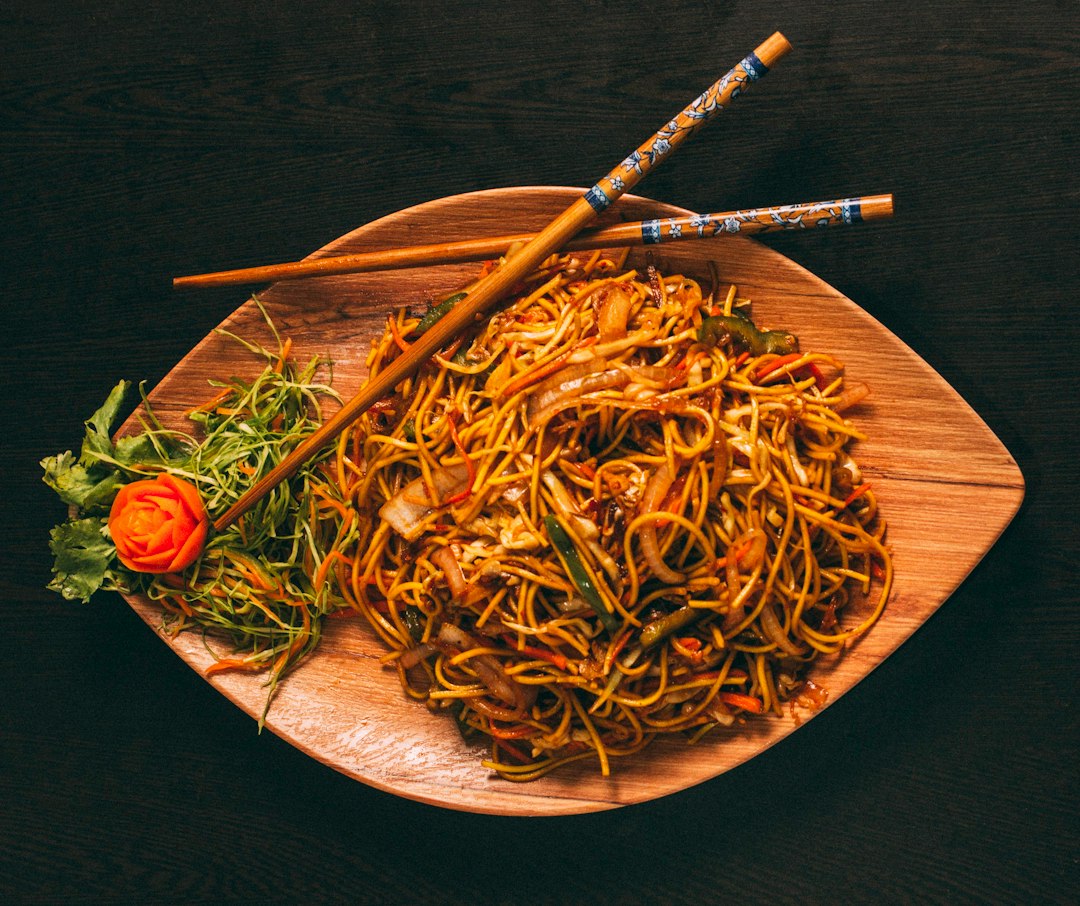
P.F. Chang’s has launched StrEATS of Asia, an eight-dish menu running at its Gulf restaurants from 4 November to 14 December. The line-up reads like a tour: Japanese korokke, Indonesian satay, a coconut laksa, Thai basil kra pao, Korean japchae, nasi goreng. The framing is street food, from the stalls of Bangkok to the grills of Jakarta, served in a sit-down chain.
It is a familiar move. “Street food” has become one of the most reached-for words on a modern menu, and it is easy to see why. It promises something the chain format usually cannot: the sense that a dish is unpolished, local and alive, cooked by someone who has made it ten thousand times on the same corner. Put the label on a limited-time menu and it does the marketing on its own.
The catch is that street food and a chain kitchen want opposite things. Real street food is narrow and repetitive, one vendor, one dish, cooked to order over a fierce heat most dining rooms cannot run. A chain needs the reverse: a menu that travels, holds on a pass and tastes the same in every branch. What arrives is rarely the street and more an idea of it. That can still be very good. It is just a different promise.
Britain has run this playbook for years. Wagamama built a national chain on an idea of the Japanese canteen, itsu did it with grab-and-go Asian, and supermarkets now sell “street food” kits and chilled “market” ranges by the aisle. The word has travelled so far from the kerb that it mostly signals a flavour profile now, bold, a little spicy, vaguely pan-Asian, rather than a place.
None of that makes a korokke less tasty. It is just worth knowing what the label is doing. When a chain sells you the street, it is selling the feeling of it, and the feeling, it turns out, is the easiest part to put on a menu.