

Quick Overview: What Makes Mary Berry’s Lasagne So Loved?
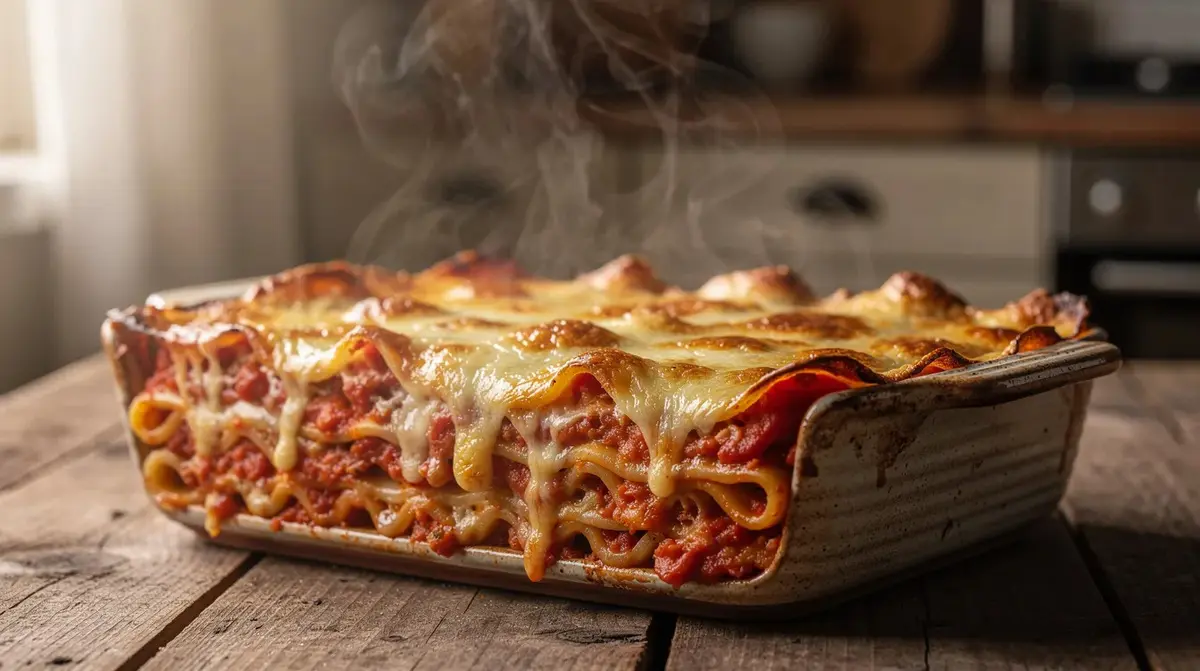
Picture a cold winter evening in the UK, the kitchen windows fogged with steam, and a golden brown lasagne bubbling away in the oven. For millions of British households-and more than a few pub kitchens-that image is inseparable from the name Mary Berry. Her lasagne recipe has become one of the most searched-for Comfort Dishes in the country, trusted by families, caterers and Hospitality professionals alike.
There are two main versions worth knowing. The first is Mary Berry’s traditional lasagne al forno: layers of rich meat sauce, silky white sauce and dried pasta sheets topped with grated cheddar and Parmesan. The second is her lighter “Lasagne Revisited,” built around a crème fraiche sauce that swaps the classic béchamel for something quicker and tangier. The recipe serves eight to ten people, making either version ideal for scaling.
This article is not a step-by-step classic lasagne recipe. It is a guide to why Mary Berry lasagne works so well, how professionals can adapt it, and why it remains perfect for entertaining guests at any scale.
Why Mary Berry’s Lasagne Became a British Classic
Mary Berry’s influence on British cooking stretches back to the 1970s, long before The Great British Bake Off turned her into a household name. Her cookery books landed in kitchens across the country at a time when lasagne was still considered exotic by many home cooks. Over the decades, she refined the dish until it became something distinctly British in character.
Mary Berry’s lasagne recipe has been popular for over 50 years, evolving from versions that used dripping to fry mince to the modern approach with olive oil, fresh herbs and subtle flavour boosters. Touches like dijon mustard in the béchamel and redcurrant jelly in the ragù appeared gradually, each one sharpening the balance.
The dish feeds a crowd-the recipe serves 8 to 10 people-which makes it naturally suited to big family gatherings, school catering, pub specials and casual banqueting. Search interest in “Mary Berry lasagne” rises predictably each autumn, which is worth noting if you are planning seasonal menus. The emotional pull is real too: reliable, forgiving for less confident cooks, and associated with Mary Berry’s reassuring on-screen manner, Mary’s classic lasagne has staying power few other recipes can match. For many UK home cooks, Mary Berry lasagne remains a reliable dish for family dinners and weekend entertaining.
Inside Mary Berry’s Method: Meat Sauce, White Sauce and Resting Time
Mary Berry’s lasagne depends on three pillars: a slow-cooked meat sauce, a flavoured white sauce, and a generous resting period before the dish goes anywhere near the oven.
The Role of the Meat Sauce (Ragu)
The ragù is where the really meaty flavour lives. Mary Berry’s version uses 900g of minced beef, two onions finely chopped, two garlic cloves (garlic cloves crushed), four sticks of celery roughly chopped, and aromatics including chopped thyme. You brown the mince in a large frying pan with olive oil-working in batches so the beef sears rather than steams-then combine it with tomato purée and thyme, chopped tomatoes (two 400g tins of tinned tomatoes), beef stock, and plain flour to thicken.
The real signature is the addition of redcurrant jelly or sugar to balance tomato acidity. Berry uses optional three tablespoons of tomato purée alongside one tablespoon of jelly or sugar tomato purée, and the result is a sauce with subtle sweetness, a glossy finish and a meaty flavour that holds up beautifully across layers. If redcurrant jelly is unavailable, redcurrant jelly can be substituted with one teaspoon of caster sugar.
Cook the ragu in the oven for 1 to 1.5 hours at around 160°C. This slow-cook method suits combi ovens and AGA kitchens, freeing up hob space during prep. The extended time creates tenderness and concentrates flavour far beyond a quick stovetop simmer-cook the ragu in the oven for 1.5 hours for the best results. Season generously with salt and pepper before layering.
Why the White Sauce Matters
Béchamel sauce is a traditional component of lasagne, but in Mary Berry’s version it is anything but neutral. She builds a roux-sauce: melt the butter in a saucepan with plain flour, then gradually whisk in 750ml of hot milk, whisking constantly to prevent lumps. Use hot milk to prevent lumps in the white sauce; cold milk added too quickly is the most common cause of a grainy texture.
Two teaspoons of Dijon mustard and parmesan (around 50g, finely grated salt and pepper to taste transform the béchamel from bland to deeply savoury. That gentle tang is what guests often describe as “moreish” without being able to place it. For caterers, this base white sauce scales well for moussaka, fish pie and vegetable gratins.
The lighter alternative-Mary Berry’s crème fraiche sauce, thickened with cornflour and flavoured with mustard and Parmesan cheese- is generally preferable for quick midweek home cooking or lighter lunch menus where crème fraiche replaces the classic roux-based approach.
Layering and the Famous Six-Hour Rest
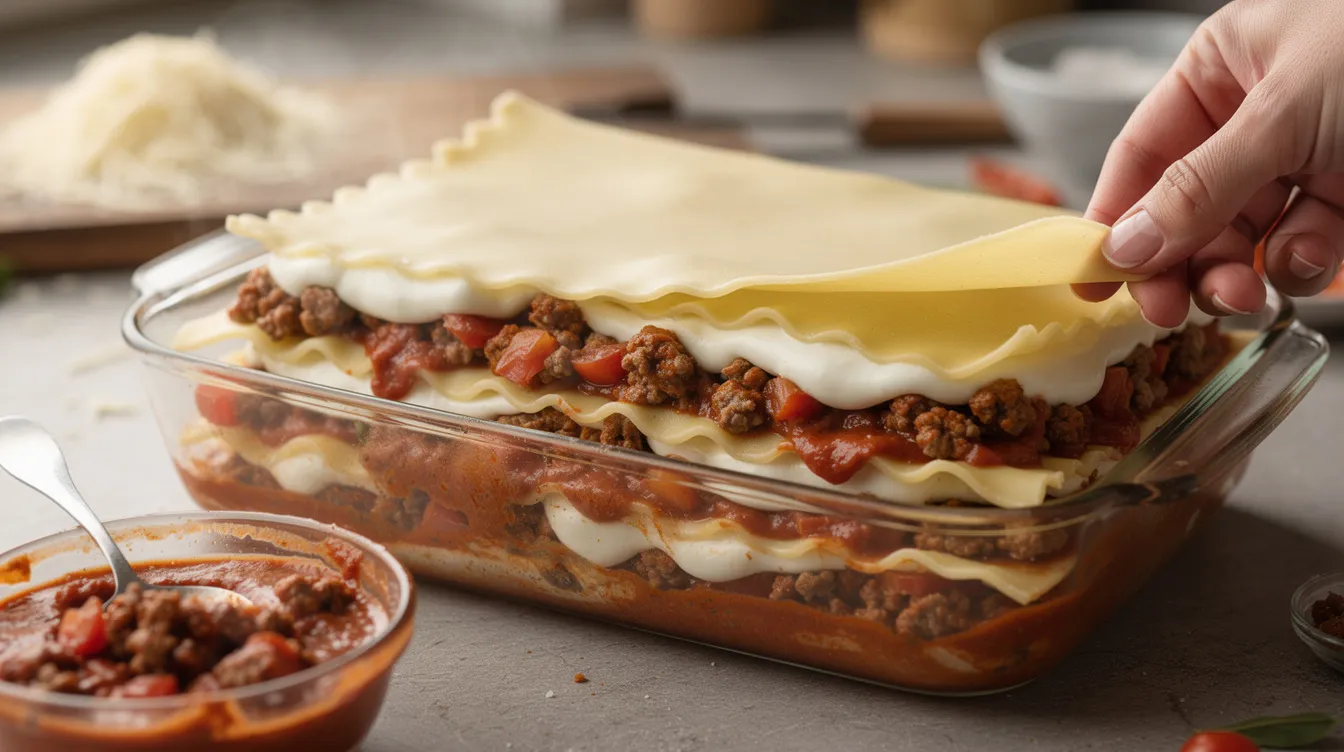
Assembly follows a clear visual sequence. Spoon one third of the remaining meat sauce into the base of a shallow ovenproof dish. Spread one third of the remaining white sauce over it. Lay a single layer of lasagne sheets on top. Repeat: spread half of the remaining meat sauce, then half of the remaining white sauce, then another layer of lasagne sheets. For the final layer, spoon half of what remains and finish with white sauce, grated cheddar (around 75g of cheddar cheese) and extra Parmesan. This creates three neat layers; preheat the oven to 200°C before baking. The grated method ensures an even, golden brown crust.
Let the assembled lasagne stand for six hours before cooking. This is the step that separates Berry’s approach from most others. Resting time for lasagne improves flavour and texture: the dried pasta sheets soften, the gluten relaxes, and the layers settle so that the lasagne slices cleanly. For trade kitchens, this six-hour window before cooking means you can assemble in the morning and bake for evening service.
Bake the lasagne at 200°C for 45 minutes until the top is golden and the edges bubble. Then let it rest for 10–15 minutes before slicing-this firms the structure and prevents sloppy portions on the pass.
If six hours is impossible, par-boil lasagne sheets for 3–4 minutes or use fresh pasta sheets to reduce resting time while keeping the spirit of Berry’s approach.
What Makes a Really Good Lasagne? Lessons from Mary Berry
Whether cooked at home or for a 200-cover event, the principles behind Mary Berry lasagne apply universally:
- Balance: enough meat sauce to keep layers moist, enough white sauce for creaminess, but not so much liquid that portions collapse. Bring to the boil before simmering to reduce excess moisture.
- Texture: al dente but tender pasta, a soft interior and a crisp top that stands up under a heat lamp.
- Seasoning: salt and pepper, herbs, plus small touches like sugar, tomato purée adjustments and mustard keep flavours bright. Two tablespoons of tomato purée can be adjusted to taste.
- Ingredients: proper beef stock, mature Cheddar, real Parmesan and level tablespoons of flour for the roux all make a noticeable difference when guests compare across venues.
Fewer layers in lasagne can speed up assembly and cooking, which is useful for fast-turnaround kitchens. Consistency of portion size and structure matters for caterers-a well-set lasagne is easier to slice into uniform squares.
Tips for Better Flavour, Whether at Home or in Service
Mary Berry’s framework is forgiving but benefits from professional touches. Always brown mince in batches, deglazing the pan with stock. Simmer the remaining meat sauce until thick enough to leave a clear trail. Taste both sauces before layering-once baked, you cannot correct blandness. Preheat the oven properly and experiment with cheese blends: Cheddar for sharpness, Parmesan for depth, and a little mozzarella for stretch in casual venues.
Trade-Focused Tweaks
- Use higher-fat mince (15–20%) for gastropubs, skimming excess fat before layering. Then half the fat worry disappears.
- Incorporate British regional touches-local farm Cheddar, herb-infused oils-to differentiate your menu while keeping the classic lasagne structure.
- Bake in GN pans using the same three-layer method. Spoon half portions into service dishes for neat rectangles.
- Document cooking and holding times to maintain quality across multiple service periods. One teaspoon more or less of seasoning can shift a batch.
Serving Ideas: From Family Suppers to Hospitality Menus
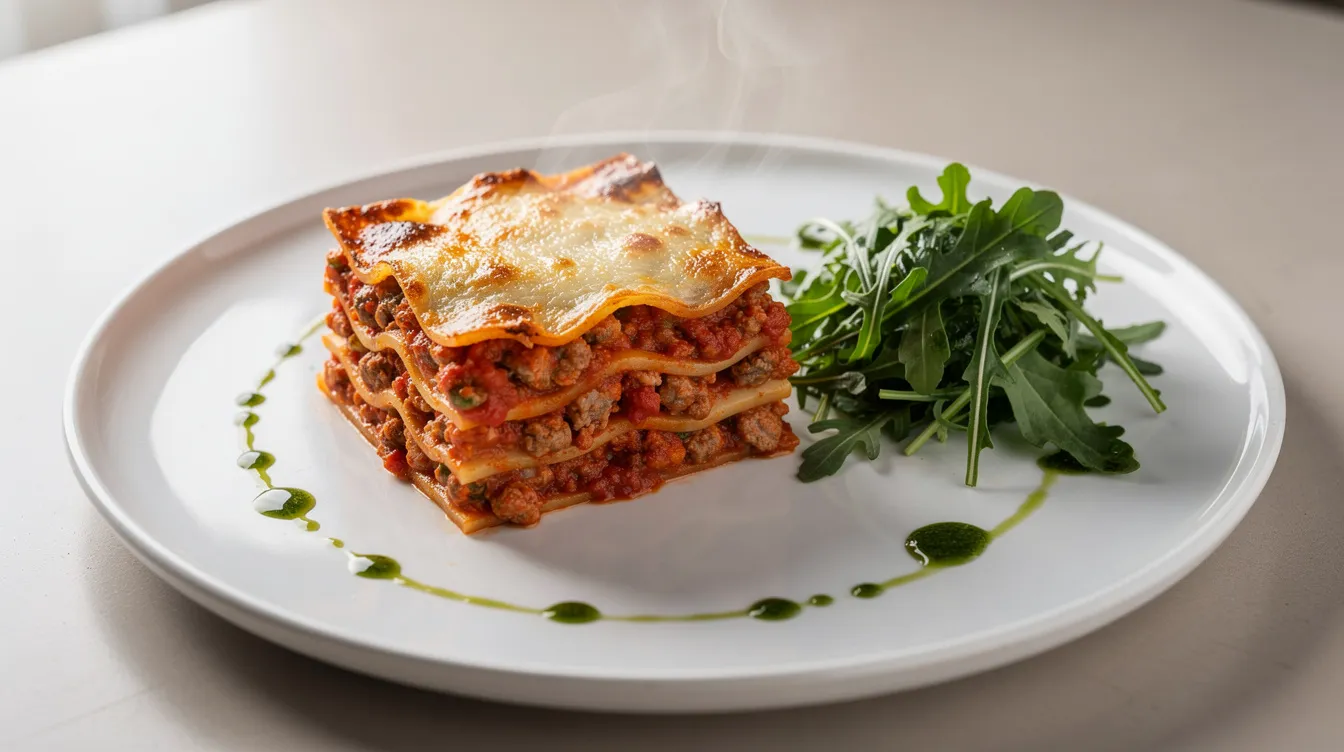
Lasagne works as well for a Tuesday family dinner as for a Friday-night special. At home, pair it with green salad and garlic bread. In hospitality, plate a neat square with dressed rocket and a streak of basil oil. For buffets and corporate lunches, lasagne al forno is a reliable hot option thanks to its make-ahead nature.
Vegetarian adaptations-swapping meat for slow-cooked lentils or aubergine-follow the same layered logic. Mary Berry’s lighter crème fraiche lasagne suits summer menus and lighter lunch offers.
Common Mistakes with Lasagne (and How Mary Berry Helps Avoid Them)
Lasagne fails in predictable ways, and Berry’s method addresses most of them:
- Wet ragù: her extended oven cooking (one and a half hours) concentrates flavour and reduces moisture.
- Undercooked pasta: the six-hour rest softens dried sheets without pre-boiling.
- Bland white sauce: dijon mustard and Parmesan lift what would otherwise taste like plain flour and milk.
- Over-cheesed top: the balance of Cheddar and Parmesan creates a crisp crust without grease.
- Cutting too early: resting 10–15 minutes post-bake firms layers for clean slicing.
FAQs: Mary Berry Lasagne for Home Cooks and Hospitality
Can I make Mary Berry’s lasagne ahead of time?
Yes. Assemble in the morning, let the lasagne stand for six hours before cooking, then bake before service. For trade settings, you can chill overnight and reheat portions to a safe internal temperature.
Do I really need to rest the lasagne for six hours?
It produces the best texture and cleanest slices. If time is short, par-boil dried lasagne sheets for 3–4 minutes or use fresh pasta sheets instead.
What can I use instead of redcurrant jelly in the meat sauce?
One teaspoon of sugar or a splash of balsamic vinegar mimics the sweetness and balances the tomatoes effectively.
Why is my white sauce lumpy?
Adding cold milk too quickly is usually the cause. Heat the milk first, add it gradually, and whisk constantly-exactly as Mary Berry’s method instructs.
Can I change the cheeses in Mary Berry’s lasagne?
Cheddar cheese can be replaced with mozzarella or Gruyère. A blend tailored to your venue’s style works well; just maintain the balance to avoid excess grease.
Is Mary Berry’s lasagne suitable for entertaining guests?
Absolutely. The large yield, make-ahead nature, and reliable results make this classic lasagne perfect for dinner parties, family-run pubs, and corporate caterers alike.