

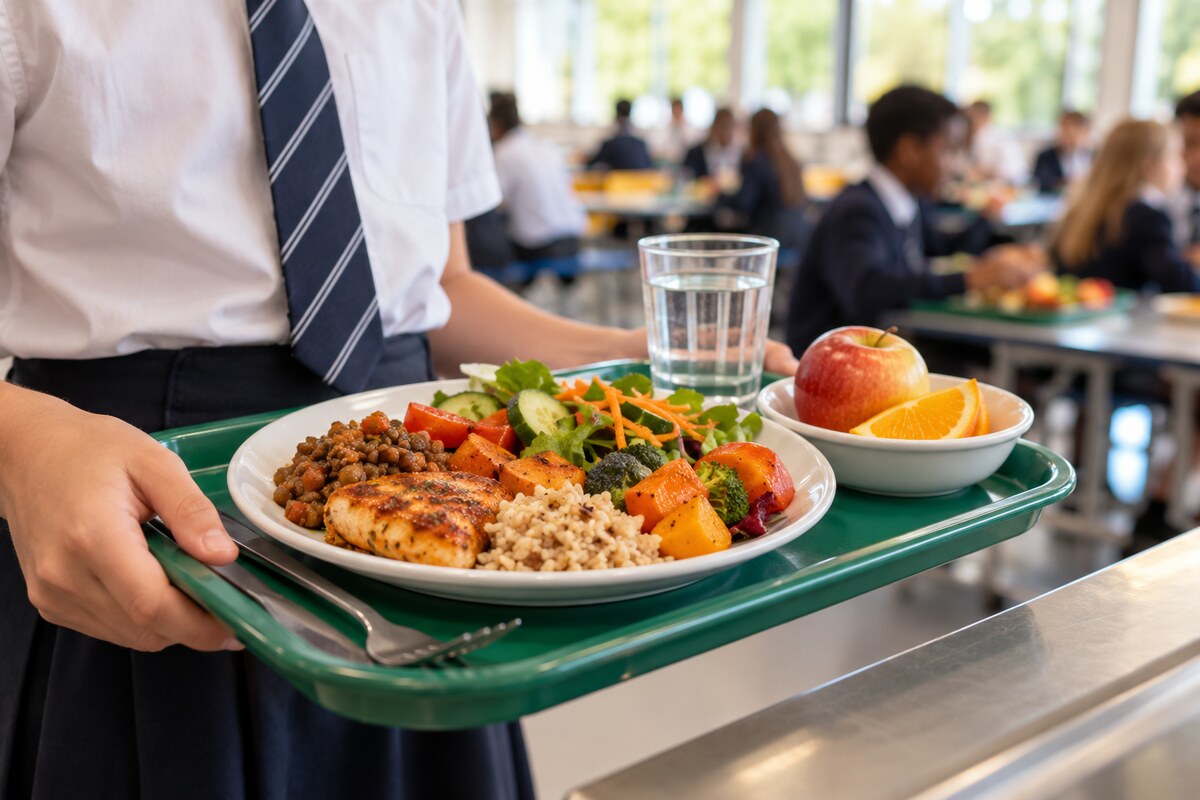
The new school food standards in England will introduce major changes to the meals served to pupils, with more vegetables, fruit, wholegrains and pulses expected to appear on school menus.
The updated requirements are due to begin from September 2027, with a phased implementation period for some secondary-school changes. The reforms are intended to improve children’s diets, reduce access to foods high in sugar, salt and fat, and make schools more accountable for the meals they provide.
Pizza, sausage rolls, sugary puddings and deep-fried foods are among the items expected to face tighter restrictions. Schools will also be required to publish their food policies and menus online, making it easier for parents and pupils to see what is being served.
What are the new school food standards?
The new school food standards represent the biggest overhaul of school meal requirements in England for more than a decade.
Under the updated approach, vegetables will be served with every main meal, including grab-and-go options. Schools will also be expected to provide more fibre-rich wholegrains and regularly include pulses such as beans, lentils and chickpeas.
Sugary and sweetened drinks will face tighter controls, alongside foods containing high levels of salt, saturated fat or added sugar. Deep-fried products will also be restricted.
Desserts will not disappear completely, but sweet baked puddings will need to contain or be served with a full portion of fruit.
The government has published further information about its plans to remove high-sugar foods from school menus, including details about vegetables, wholegrains and healthier school meals.
New school food standards: key changes from 2027
The reforms will affect several parts of the school menu.
| Food category | Expected change |
|---|---|
| Vegetables | To be served with every main meal |
| Fruit | Required more regularly, including with qualifying desserts |
| Wholegrains | More fibre-rich wholegrain options expected |
| Beans and pulses | To appear alongside main meals at least once a week |
| Pizza and pastries | Availability will be restricted |
| Sausage rolls | Expected to face tighter limits |
| Sugary drinks | Further restrictions on sweetened options |
| Deep-fried food | Frequency and availability will be limited |
| Desserts | Sweet baked desserts must include or be served with fruit |
| Online menus | Schools will be expected to publish menus and food policies |
The exact menu offered by each school will still vary. Schools, academy trusts and catering providers will need to interpret the requirements while considering costs, pupil preferences, allergies and local supply arrangements.
Why are school meals changing?
The reforms are designed to address concerns about childhood obesity, tooth decay and the nutritional quality of food eaten during the school day.
For many children, school lunch provides a significant part of their daily nutrition. The quality of that meal can influence energy levels, concentration and eating habits.
The government says the changes are intended to ensure healthy food is available consistently rather than depending entirely on the individual policies of schools or catering providers.
The Department for Education has described the reforms as a major shift in how school food is planned, delivered and monitored.
New school food standards require vegetables with every meal
One of the most visible changes will be the requirement to serve vegetables with every main meal.
This could mean adding cooked vegetables, salads or vegetable-based sides to traditional school lunches. Grab-and-go meals will also need to include suitable fruit or vegetable options rather than relying only on pizza, pastries or sandwiches.
The requirement may encourage schools to introduce children to a wider range of seasonal ingredients. However, simply putting vegetables on a plate does not guarantee children will eat them.
Taste, presentation and familiarity will all matter. Schools may need to involve pupils in menu planning and introduce changes gradually rather than replacing popular meals without explanation.
Awareness of seasonal produce can also influence food choices. A previous FEAST report found that many British adults do not know which vegetables can be grown in the UK, showing that food education remains relevant beyond the school dining hall.
Will pizza and sausage rolls be banned?
Pizza and sausage rolls are expected to be restricted, but that does not necessarily mean every version will disappear from every school menu.
The rules are intended to reduce the frequency of foods that may be high in salt, saturated fat or refined carbohydrates. Recipes can vary considerably, meaning schools may be able to offer healthier versions using wholegrain bases, vegetables and controlled portion sizes.
The focus is likely to be on balance and frequency. A menu dominated by pizza, pastries and fried foods would not meet the intended direction of the standards, even if individual products were reformulated.
Schools will need to examine the complete nutritional profile of their menus rather than treating one food as automatically acceptable or unacceptable.
More beans, lentils and wholegrains
The standards will encourage schools to serve more pulses and fibre-rich foods.
Beans, chickpeas and lentils can provide protein, fibre and important nutrients. They can also be used in soups, curries, pasta sauces, stews and mixed dishes without requiring every meal to become completely vegetarian.
Wholegrain bread, brown rice and wholewheat pasta may also appear more frequently. Introducing these foods gradually could help pupils become familiar with different flavours and textures.
Catering teams may need to test recipes carefully. A technically healthy dish will have limited value if a large proportion is left uneaten and thrown away.
New school food standards for desserts
Desserts are another area expected to change under the new school food standards.
Sweet baked desserts will need to contain or be served with a full portion of fruit. This could mean fruit crumbles, sponge puddings served with fruit or desserts in which fruit forms a substantial part of the recipe.
Highly sugary products such as waffles, ice cream and desserts without fruit are expected to face tighter restrictions.
The aim is not necessarily to remove every sweet food, but to reduce sugar and make fruit a more consistent part of school meals.
Schools will need to publish their menus
Greater transparency is an important part of the reforms.
Schools will be expected to publish food policies and current menus online. This will allow parents to understand what their children are offered and make informed decisions about packed lunches, allergies and dietary preferences.
Each school is also expected to nominate a governor with responsibility for school food. This could provide a clearer line of accountability when concerns are raised about menu quality or compliance.
Publishing a menu is only useful when it accurately reflects the food being served. Schools may therefore need stronger communication between leadership teams, kitchen staff and external catering providers.
How will the new standards be monitored?
A national system for monitoring compliance is expected to accompany the changes.
Previous school food standards have not always been applied consistently. Without effective monitoring, written requirements can have limited influence on what pupils receive each day.
Possible enforcement measures include checks connected with school kitchen inspections and clearer responsibility for reporting problems. Schools that fail to meet the standards may be expected to improve their menus and receive support to make the necessary changes.
The effectiveness of the system will depend on resources, training and the amount of practical guidance available to schools.
What challenges could schools face?
Healthier menus may create additional practical and financial pressures.
Fresh produce can require more preparation, while wholegrain recipes and pulse-based meals may need testing before pupils accept them. Catering teams must also manage allergies, religious requirements and different dietary needs.
Food inflation and staff costs remain significant concerns. If meal funding does not keep pace with ingredient and labour costs, schools could find it difficult to improve quality without reducing choice or portion sizes.
Food waste is another challenge. New dishes need to be appealing as well as nutritious. Schools may benefit from tasting sessions, pupil feedback and educational activities that help children understand unfamiliar ingredients.
What do the changes mean for parents?
Parents should begin seeing clearer information about school food as implementation approaches.
Online menus and food policies will make it easier to compare what is promised with what children report eating. Parents may also see more vegetables, wholegrain options and bean-based dishes on weekly menus.
Children with allergies or medical dietary requirements should continue to receive appropriate support. Parents should contact their school directly when a child requires a specific meal plan.
Families can also help by introducing similar ingredients at home. Familiarity with vegetables, lentils and wholegrains may make children more willing to try them at school.
When do the new school food standards begin?
The new school food standards are expected to begin in England in September 2027.
Some changes may be introduced gradually, particularly in secondary schools where menus and grab-and-go services can be more complex.
Schools and caterers have been given time to review contracts, redesign menus, train staff and communicate with families before implementation.
Further guidance may clarify how individual requirements will be assessed. Parents and school leaders should therefore check official updates as the introduction date approaches.
A major change for school meals
The reforms could significantly change what children eat during the school day.
More vegetables, fruit, wholegrains and pulses may improve the nutritional balance of school menus. Greater transparency could also make it easier to identify schools requiring additional support.
Success will depend on more than removing particular foods. Meals must remain affordable, practical and appealing enough for children to eat.
If schools receive adequate funding, training and preparation time, the new standards could help make healthier food a normal part of school life rather than an occasional option.