

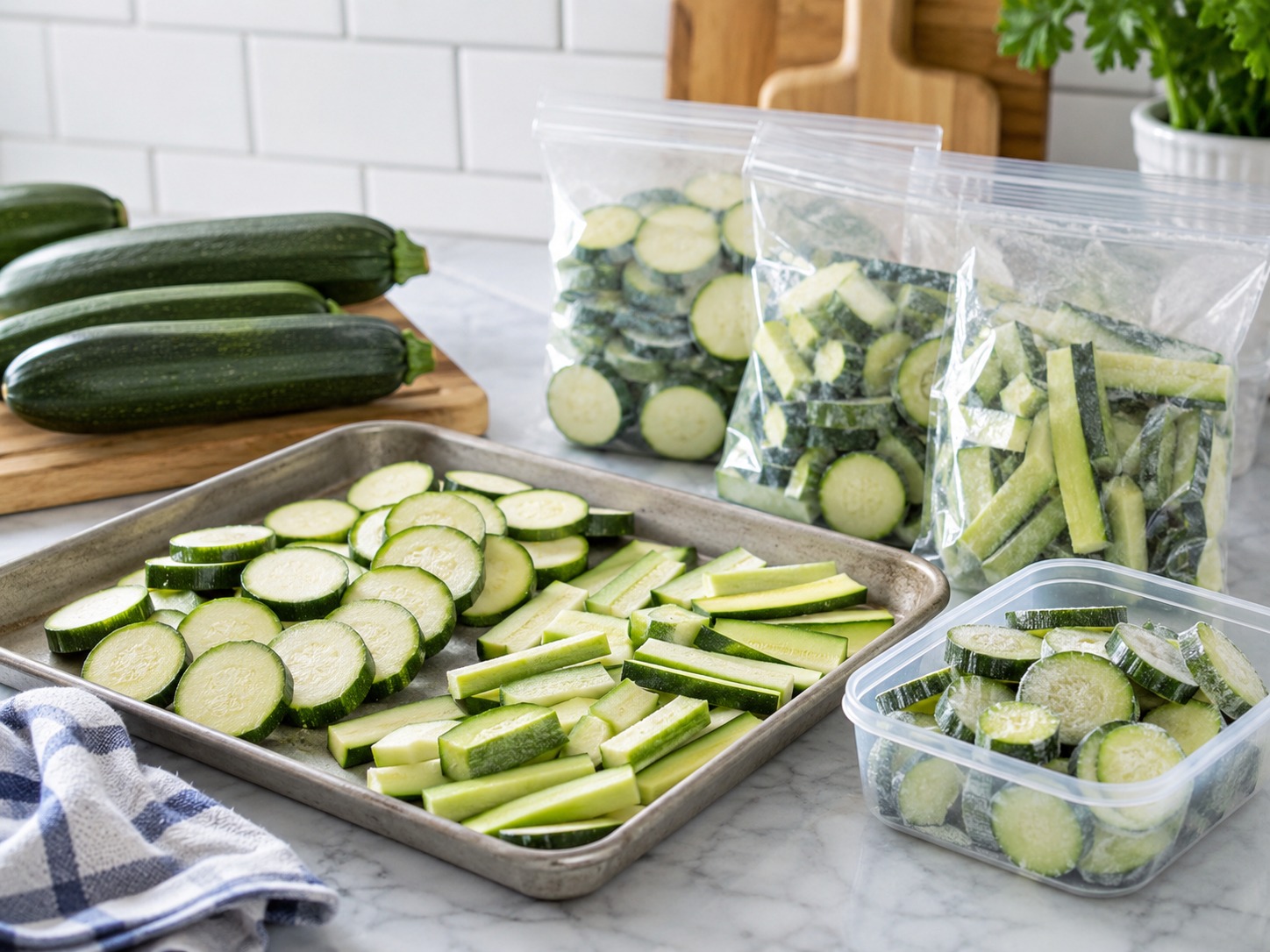
Learning how to freeze courgettes properly can save a generous summer crop from going to waste. Courgettes contain a great deal of water, so they will never come out of the freezer as crisp as they went in. However, a short blanch, thorough drying and quick freezing can reduce the soft, watery texture that puts many people off.
The key is to freeze courgettes for the way you plan to cook them later. Slices and chunks work well in soups, stews, pasta sauces and traybakes, while grated courgette is useful for fritters, cakes and savoury bakes. The method below keeps the pieces separate, limits excess moisture and makes them easy to use straight from frozen.
Quick Answer: How to Freeze Courgettes Without Them Going Mushy
Slice or dice fresh courgettes, blanch them briefly for about one to two minutes, cool them immediately in iced water and dry them extremely well. Spread the pieces in a single layer on a tray, freeze until firm, then transfer them to labelled freezer bags. Cook them from frozen rather than thawing first. This will not keep them completely crisp, but it gives a noticeably better texture than freezing wet, raw pieces in one large bag.
How to Freeze Courgettes: Quick Facts
| Question | Best Approach |
| Best cut | Slices, half-moons or small cubes of even size |
| Best preparation | Brief blanch, iced-water cooling and thorough drying |
| Best freezing method | Tray-freeze first, then bag in useful portions |
| Best way to cook | Use straight from frozen in hot dishes |
| Best uses | Soups, sauces, curries, pasta, fritters and bakes |
| Main mistake | Freezing wet pieces together in one crowded bag |
Why Courgettes Turn Soft in the Freezer
Courgettes have a delicate structure and a high water content. As the water inside the vegetable freezes, ice crystals form and damage some of the cell walls. When the courgette defrosts, that water escapes, which is why the pieces can feel soft or watery.
No home-freezing method can prevent this completely. The aim is to control the damage by starting with firm courgettes, removing surface moisture and freezing them quickly. The same principle helps when preparing other fresh summer produce, including the ideas in these easy cucumber recipes, where moisture management also makes a noticeable difference.
The Best Method: How to Freeze Courgettes
1. Choose Fresh, Firm Courgettes
Use courgettes that feel firm, look glossy and have no soft patches. Smaller and medium-sized courgettes usually freeze more evenly than very large ones, which can have a softer centre and larger seeds. Freeze them as soon as possible after buying or picking them rather than waiting until they are already beginning to lose texture.
2. Wash and Cut Them Evenly
Wash the courgettes, trim the ends and cut them into the shape you are most likely to use. Half-moons are useful for pasta and stir-fries, cubes suit soups and curries, and thicker rounds work well in traybakes. Keep the pieces similar in size so they blanch and freeze at the same rate.
There is no need to peel courgettes. The skin adds colour and helps the pieces hold together slightly better during cooking.
3. Blanch Briefly
Bring a large pan of water to the boil. Add the courgette pieces in small batches and blanch for around one to two minutes, depending on their thickness. The aim is not to cook them until tender. A very short blanch slows the natural enzymes that affect colour, flavour, and texture during storage.
Do not add salt to the blanching water. Salt can draw out more moisture and may leave the pieces softer.
4. Cool Them Immediately
Lift the courgettes from the boiling water and place them straight into a large bowl of iced water. Leave them only until fully cool. This stops the cooking process, helping the pieces remain firmer and brighter.
5. Dry Them Thoroughly
This is the step that makes the biggest practical difference. Drain the courgettes well, spread them over clean tea towels or kitchen paper and pat them dry. Leave them for a few minutes so any remaining surface moisture can evaporate. Wet courgettes form more ice, stick together and release extra water when cooked.
6. Flash-Freeze on a Tray
Line a baking tray with reusable baking paper and arrange the pieces in a single layer without letting them overlap. Freeze the tray until the pieces are firm. This first freeze keeps them separate, so you can remove only the amount needed later instead of defrosting a solid block.
7. Pack, Label, and Return to the Freezer
Transfer the frozen courgette pieces to freezer bags or airtight containers. Press out as much air as possible without crushing them. Label each bag with the date, cut, and portion size. Smaller, flatter bags freeze quickly, stack neatly, and are easier to use for weeknight cooking.
For general safety advice, follow the Food Standards Agency guidance on chilling, freezing and defrosting food safely. Keep the freezer working properly and avoid leaving prepared vegetables at room temperature for long periods.
How to Freeze Courgettes Without Blanching
Yes, you can freeze raw courgettes, but the texture is usually softer, and the colour can fade more quickly. Raw freezing is most useful when the courgettes will later be blended into soup, cooked into a sauce, or used in a bake where firmness is not important.
For raw freezing, cut the courgettes, dry them carefully, and tray-freeze them before bagging. Do not expect the pieces to behave like fresh courgettes in a salad or lightly cooked side dish.
How to Freeze Courgettes After Grating
Grated courgette is convenient for fritters, savoury muffins, cakes, pasta sauces and vegetable bakes. Grate it coarsely, place it in a clean tea towel and squeeze out as much liquid as possible. Divide it into recipe-sized portions and freeze each portion in a small bag or container.
You do not need to blanch grated courgette. It will become soft after freezing, but that is rarely a problem in recipes where it is mixed into batter, sauce, or filling. Write the portion weight on the bag so you can use it without measuring later.
How to Cook Frozen Courgettes for a Better Texture
Do not thaw sliced or diced courgettes unless a recipe specifically requires it. Thawing gives the released water time to pool around the vegetable. Instead, add the frozen pieces directly to a hot pan, simmering sauce, soup, curry, or roasting tray.
- Use a hot, wide frying pan so moisture can evaporate quickly.
- Cook in small batches rather than crowding the pan.
- Add frozen pieces near the end of soups and stews so they do not overcook.
- For roasting, use a hot tray and a small amount of oil.
- Season after some moisture has cooked away, especially when using salty sauces or cheese.
Frozen courgettes can also be added to quick appliances and weeknight meals. Use the practical temperature and spacing principles in this guide for easy air fryer recipes, but place the courgettes in a dish or mix them with firmer vegetables so excess liquid does not collect in the basket.
The Best Dishes for Frozen Courgettes
Frozen courgettes are best in dishes where a little softness is welcome rather than a problem. Good options include:
- Tomato and courgette pasta sauce
- Vegetable soup or blended courgette soup
- Curries, stews, and ratatouille-style dishes
- Courgette fritters made with squeezed grated courgette
- Traybakes with onions, peppers, and tomatoes
- Savoury muffins, bread, and vegetable cakes
- Lasagne, pasta bakes, and gratins
For lighter ways to use vegetables through the week, browse these low-calorie dinner ideas. Frozen courgette works particularly well in soups, tomato-based sauces and vegetable-heavy meals where texture is balanced by other ingredients.
During summer, you can also use fresh courgette on skewers or on the barbecue before freezing the surplus. These BBQ food ideas for UK summers offer simple ways to use fresh vegetables while they are still at their best.
Common Mistakes When Learning How to Freeze Courgettes
- Freezing old or soft courgettes. Freezing preserves the condition they are already in; it does not improve it.
- Over-blanching. Courgettes need only a brief dip in boiling water.
- Skipping the drying step. Surface water creates extra ice and a wetter result.
- Packing pieces together before the tray freezes. This produces one solid block.
- Thawing before cooking. For most hot dishes, cooking from frozen gives a better result.
- Expecting salad texture. Frozen courgettes are designed for cooking, not for raw dishes.
How Long Can You Keep Frozen Courgettes?
For the best flavour, colour and texture, aim to use frozen courgettes within three to six months. They may remain usable for longer when kept consistently frozen, but the quality gradually declines. Clear labels help you use older bags first and prevent forgotten vegetables from building up at the back of the freezer.
Final Thoughts on How to Freeze Courgettes
The best way to freeze courgettes without them going mushy is to manage moisture at every stage: use firm vegetables, blanch them briefly, cool them quickly, dry them thoroughly and freeze them in a single layer before bagging. Cook the pieces straight from frozen and choose dishes where a softer texture works naturally.
For more practical kitchen guides, seasonal recipes and simple ways to reduce food waste, explore the Foods section, browse the latest Cooking articles and visit the Health section. You can also find wider food, travel, and lifestyle inspiration on FEAST Online.
How to Freeze Courgettes: FAQs
How to Freeze Courgettes Without Cooking Them First
Yes. Raw courgettes can be sliced, dried, tray-frozen, and packed into bags. However, blanching generally gives better colour and texture. Raw-frozen courgettes are best for soups, sauces and bakes.
Do you need to peel courgettes before freezing?
No. The skin is edible, adds colour, and can help the pieces hold together. Simply wash the courgettes and trim the ends before cutting.
Can you freeze a whole courgette?
It is not recommended. A whole courgette freezes slowly and becomes difficult to cut and use. Slice, cube or grate it first so it freezes quickly and can be portioned easily.
Why are my frozen courgettes watery?
Courgettes naturally contain a large amount of water. They become wetter if they are frozen without drying, packed together before freezing or thawed before cooking. Brief blanching, thorough drying and cooking from frozen help reduce the problem.
Should frozen courgettes be defrosted before cooking?
Usually not. Add slices or cubes directly to a hot pan, sauce, soup or traybake. Grated courgette can be thawed if a baking recipe requires it, but squeeze out the released liquid first.
Can frozen courgettes be used for fritters?
Yes. Grated courgette is the easiest option. Thaw the portion, squeeze it very firmly in a clean tea towel, then mix it into the fritter batter.
Can you refreeze courgettes after thawing?
It is better not to refreeze fully thawed raw courgettes. If they have been cooked into a finished dish, cool that dish promptly and freeze it according to normal food-safety guidance.