

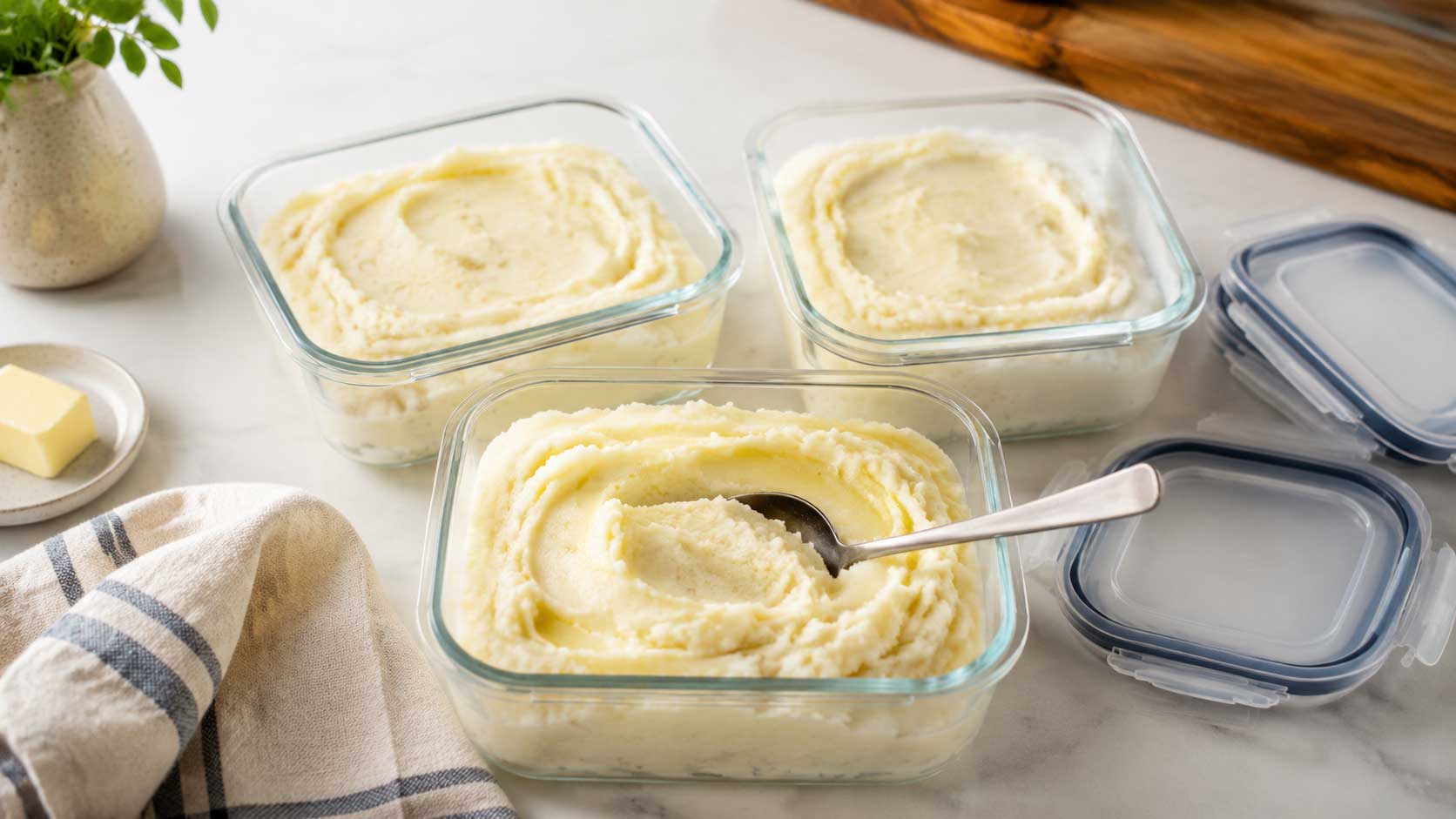
Can you freeze mashed potatoes? Yes, and it is one of the easiest ways to save leftover mash for another meal. The main challenge is texture: potatoes can sometimes turn watery, grainy or slightly dry after freezing, especially when the mash contains very little fat or has been stored with too much air around it.
A good freezing method makes a noticeable difference. Creamy mashed potatoes made with butter, milk, cream or a suitable dairy-free alternative usually freeze better than very plain mash. Portioning the potatoes before freezing also means you can defrost only what you need instead of reheating a large batch.
This guide explains how to freeze mashed potatoes, how long they keep, the best ways to defrost and reheat them, and how to improve the texture if the mash does not come back perfectly smooth. It also includes practical ideas for using leftover mash in quick family meals.
Can You Freeze Mashed Potatoes? Quick Answer
| Yes, you can freeze mashed potatoes. Let them cool promptly, divide them into meal-sized portions, seal them in airtight containers or freezer bags, and freeze. For the best texture, use them within one to two months. Defrost in the fridge or reheat carefully from frozen, adding a little butter, milk or cream while stirring. Reheated leftovers should be steaming hot throughout and should only be reheated once. |
Quick Facts About Freezing Mashed Potatoes
| Question | Useful Answer |
| Can mashed potatoes be frozen? | Yes. Creamy mash generally freezes better than very dry or watery mash. |
| Best portion size | One or two servings per container or freezer bag. |
| Best-quality freezer time | Aim to use within one to two months for the best flavour and texture. |
| Best defrosting method | Thaw overnight in the fridge, or reheat gently from frozen. |
| Best reheating methods | Saucepan, microwave or covered oven dish. |
| Main texture problem | Watery, grainy or dry mash caused by excess moisture, air exposure or overheating. |
| Food-safety point | Cool and freeze promptly; reheat until steaming hot throughout and only once. |
Can You Freeze Mashed Potatoes Successfully?
Mashed potatoes can freeze successfully, but the final texture depends on how they were made and how they are stored. Potatoes contain a lot of starch, and freezing changes the way moisture sits within that starch. When the mash is thawed, some of the water may separate, making it look loose or slightly grainy.
Fat helps protect the texture. Butter, whole milk, cream, cream cheese and many plant-based alternatives can make the mash feel smoother after reheating. Very lean mash made only with potatoes and water is more likely to feel dry or crumbly, although it can usually be improved during reheating.
The potatoes should also be smooth before they go into the freezer. Lumps will not disappear later, and overworked mash may become gluey. Mash until just smooth, season it, then cool and freeze it in manageable portions.
Freezing leftovers is a useful way to reduce waste. The same approach works well alongside practical guides such as Leftover Rice Recipes: 12 Easy Ideas for Quick Meals, where cooked staples are turned into fresh lunches and dinners instead of being thrown away.
Which Types of Mashed Potato Freeze Best?
Classic Mashed Potatoes
Classic mash made with floury potatoes, butter and milk is usually the most reliable option. It has enough richness to stay soft after freezing, but it is not so wet that it separates badly.
Cheesy or Creamy Mash
Cheesy mash, sour-cream mash and mash made with cream cheese often freeze well because the extra fat supports a smoother texture. Strong flavours such as Cheddar, roasted garlic, mustard or herbs may soften slightly in the freezer, so taste and adjust the seasoning after reheating.
Dairy-Free Mashed Potatoes
Dairy-free mash can also be frozen. Use a creamy plant-based milk, dairy-free butter or a little olive oil. Avoid using too much thin liquid, as extra water can make the thawed potatoes loose. Oat-based and soy-based alternatives often produce a creamier result than water alone.
Sweet Potato Mash
Sweet potato mash freezes well, although it may release a little moisture after thawing. Stir it over low heat and add a small amount of butter or seasoning. Sweet potato is naturally softer than standard potato, so do not overmix it.
Instant Mashed Potatoes
Prepared instant mash can be frozen, but the texture varies by brand. If it was made quite thin, it may become watery after thawing. Reheat it slowly and add extra flakes, butter or cheese if it needs more body.
Mash with Gravy
It is usually better to freeze mashed potatoes and gravy separately. This gives you more control over the texture and makes both parts easier to reheat evenly. If they are already mixed, freeze them in a shallow container and stir thoroughly during reheating.
How to Freeze Mashed Potatoes Step by Step
- Cool the mash promptly. Spread a large batch in a shallow dish so it loses heat more quickly. Do not leave cooked food sitting out for long periods.
- Divide it into portions. One- or two-person portions are easier to freeze, defrost and reheat evenly.
- Choose airtight packaging. Use freezer-safe containers or strong freezer bags. Leave only a small amount of expansion space in rigid containers.
- Flatten freezer bags. Press the mash into a flat layer and remove as much air as possible before sealing. Flat portions freeze and defrost faster.
- Label clearly. Add the date, portion size and flavour, especially if you are freezing plain, cheesy and garlic mash at the same time.
- Freeze promptly. Place the portions in the freezer once they have cooled and been packed properly.
The UK Food Standards Agency advises cooling leftovers and getting them into the fridge or freezer within one to two hours. Read the FSA guidance on chilling, freezing and defrosting food safely.
For another ingredient-specific freezing guide, see How to Freeze Courgettes Without Them Going Mushy. The texture is different, but the same principles of prompt cooling, portioning and airtight storage matter.
How Long Can You Freeze Mashed Potatoes?
For the best eating quality, aim to use frozen mashed potatoes within one to two months. They may remain frozen for longer, but flavour can become dull and freezer burn may dry the surface. Mash stored in thin bags with air trapped inside tends to lose quality faster than mash sealed tightly in small portions.
A freezer label helps prevent forgotten containers. Write the date in a clear format and rotate older portions to the front. If the package has split, contains heavy ice build-up or has been allowed to thaw during a power cut, assess it carefully rather than relying only on the original date.
Can You Freeze Mashed Potatoes in Scoops?
Yes. Scooping mash onto a lined tray is useful when you want individual portions. Freeze the scoops until firm, then transfer them to a labelled freezer bag. This method works especially well for small households, children’s meals and topping individual pies.
Keep the scoops similar in size so that they reheat evenly. A large ice-cream scoop or serving spoon makes consistent portions. Once frozen solid, remove as much air as possible from the storage bag.
How to Defrost Frozen Mashed Potatoes
Defrosting in the Fridge
The most controlled method is to transfer the mash from the freezer to the fridge the night before. Keep it covered while it thaws. Once defrosted, use it promptly and do not refreeze it.
Reheating Directly from Frozen
Small portions can be reheated from frozen. Put the mash in a saucepan over low heat with a splash of milk, or microwave it in short bursts in a covered microwave-safe bowl. Break up the frozen block as it softens and stir frequently so there are no cold areas.
Why You Should Not Defrost at Room Temperature
Leaving frozen mash on the worktop for hours allows the outside to warm while the centre remains cold. The fridge or microwave defrost setting is safer and gives more predictable results.
How to Reheat Frozen Mashed Potatoes
Saucepan Method
- Place the thawed or partly frozen mash in a heavy saucepan.
- Add a splash of milk, cream or stock and a small knob of butter.
- Heat gently, stirring and folding rather than beating aggressively.
- Continue until the mash is steaming hot throughout.
The saucepan method gives the most control. Low heat reduces the chance of scorching, and you can adjust the texture gradually.
Microwave Method
- Put the mash in a microwave-safe bowl and cover loosely.
- Heat in short intervals, stirring between each one.
- Add a little butter or milk once the centre begins to soften.
- Check that the whole portion is steaming hot, not just the edges.
Microwave power levels vary, so treat timings as a guide. Smaller portions reheat more evenly than a deep container filled to the top.
Oven Method
For a family-sized portion, place the thawed mash in a covered ovenproof dish. Add a few small pieces of butter, cover with foil or a lid, and heat at a moderate temperature until hot throughout. Stir once or twice if possible. Remove the cover near the end if you want a lightly golden top.
Once the mash is hot, it can be served with simple mains such as Frozen Chicken Thighs in an Air Fryer, roasted vegetables or a quick pan sauce.
How to Fix Watery, Grainy or Dry Mashed Potatoes
If the Mash Is Watery
Heat it gently in a wide pan so excess moisture can evaporate. Stir regularly and avoid adding more liquid. A little grated cheese, cream cheese or extra potato can help thicken it if needed.
If the Mash Is Grainy
Add warm butter and a small splash of warm milk or cream, then fold gently. Avoid high-speed blending, which can make potato starch sticky and gluey.
If the Mash Is Dry
Add liquid a teaspoon or tablespoon at a time while heating. Butter, milk, cream, stock or a dairy-free alternative can all work. Add slowly, because it is easier to loosen thick mash than to rescue mash that has become too wet.
If the Flavour Seems Flat
Freezing can soften seasoning. Taste after reheating and add salt, black pepper, mustard, herbs, cheese or roasted garlic as needed. A squeeze of lemon is not traditional, but a tiny amount can brighten very rich mash.
What Can You Make with Frozen Mashed Potatoes?
- Shepherd’s or cottage pie topping: Spread reheated mash over the filling, rough up the surface with a fork and bake until golden.
- Potato cakes: Mix cold mash with egg, flour, cheese or herbs, shape into patties and fry or air fry until crisp.
- Fishcakes: Combine mash with cooked fish, spring onion, parsley and lemon, then coat and cook.
- Croquettes: Shape firm cold mash around cheese, coat with crumbs and bake or fry.
- Soup thickener: Stir a spoonful into vegetable or chicken soup to add body.
- Gnocchi-style dumplings: Use firm mash with flour and egg, taking care not to overwork the dough.
- Pie and casserole topping: Use it over chicken, lentils, vegetables or leftover roast meat.
For more potato inspiration, the Jacket Potato Fillings guide has simple lunch and dinner combinations. Potato cakes made from leftover mash can also be cooked alongside ideas from the Air Fryer Recipes UK guide.
Mashed potatoes also work as part of a broader weekly meal plan. Pair a smaller portion with dishes from Low Calorie Dinner Ideas, serve a fresh side from the Cucumber Recipes guide, or use leftover vegetables with ideas from What to Do With Courgettes. For nights when potatoes are not on the menu, Easy Pasta Recipes offers another flexible route to a quick meal.
Common Mistakes When Freezing Mashed Potatoes
- Freezing a huge deep container that takes a long time to cool and thaw.
- Leaving too much air in the bag, which encourages freezer burn.
- Making the mash very watery before freezing.
- Overmixing after reheating and creating a gluey texture.
- Reheating only the outside while the centre stays cold.
- Refreezing mash that has already been fully defrosted.
- Reheating the same portion more than once.
The simplest way to avoid most problems is to freeze the mash in small airtight portions while it is still fresh, then reheat it gently with a little added richness.
Frequently Asked Questions
Can you freeze mashed potatoes with milk and butter?
Yes. Mashed potatoes made with milk and butter often freeze better than very plain mash because the added fat helps the texture stay creamy.
Can you freeze mashed potatoes made with cream?
Yes. Creamy mash can freeze well, although very rich mash may separate slightly. Reheat slowly and stir gently.
Can you freeze mashed potatoes with cheese?
Yes. Cheesy mash is suitable for freezing. Strong cheese flavours may become milder, so taste and adjust after reheating.
Can you freeze mashed potatoes in a freezer bag?
Yes. Use a strong freezer bag, remove excess air, flatten the mash into a thin layer and label it clearly.
Do you have to defrost mashed potatoes before reheating?
No. Small portions can be reheated from frozen in a saucepan or microwave, but they need frequent stirring so the centre heats evenly.
How do you make frozen mashed potatoes creamy again?
Reheat over low heat and fold in warm butter, milk, cream, cream cheese or a dairy-free alternative a little at a time.
Can you refreeze mashed potatoes?
It is best not to refreeze mashed potatoes after they have been fully defrosted. Freeze them in small portions so you only thaw what you need.
How long do mashed potatoes last in the fridge?
Follow current food-safety guidance for leftovers. Cool them promptly, keep them covered and use them within the recommended leftover window or freeze them if they will not be eaten in time.
Final Thoughts
Can you freeze mashed potatoes? Yes. The best results come from creamy mash, small portions, airtight packaging and gentle reheating. Freeze the potatoes while they are fresh, label the portions clearly and add a little butter or milk when warming them.
Even if the texture changes slightly, frozen mash is still useful. It can become a quick side dish, pie topping, potato cake, fishcake or soup thickener. That flexibility makes it a practical freezer staple for busy households and a simple way to reduce food waste.
Food Safety Note
| Cool cooked mash promptly and refrigerate or freeze it within one to two hours. Defrost in the fridge or microwave rather than on the worktop. Reheat until steaming hot throughout, and reheat leftovers only once. If the mash has been left out for an unsafe period, smells unusual, shows mould or has been stored incorrectly, discard it. |